The Native Pen: The Women Who Indicted the Civilised World in Writing
Once the fighting stopped, a more concealed violence began. The Indigenous women who resisted through writing in the era of boarding schools and forced assimilation.
To white colonists the nineteenth century was a great advance conducted under the name of Manifest Destiny. To Indigenous women it was a hundred-year encirclement. They lost their homelands and were forced into the judgement and contempt of a white patriarchal society.
By the end of the century, as the fighting subsided, a more concealed violence began: forced assimilation. Boarding schools were established, Indigenous children were taken away, their hair was cut off and their languages forbidden. On that battlefield women mounted a different counter-attack, in writing and in speech — their war, and nobody was looking at it.
1. Sarah Winnemucca (1844–1891)
The first Indigenous woman to write an autobiography.
Sarah Winnemucca of the Northern Paiute was a writer and activist, and her life was full of conflict and pain. She was born into the family of a Paiute chief, with real influence inside the nation. From childhood she was in contact with white culture and learned the language, trying to build a bridge between two worlds, and found a chasm under it.
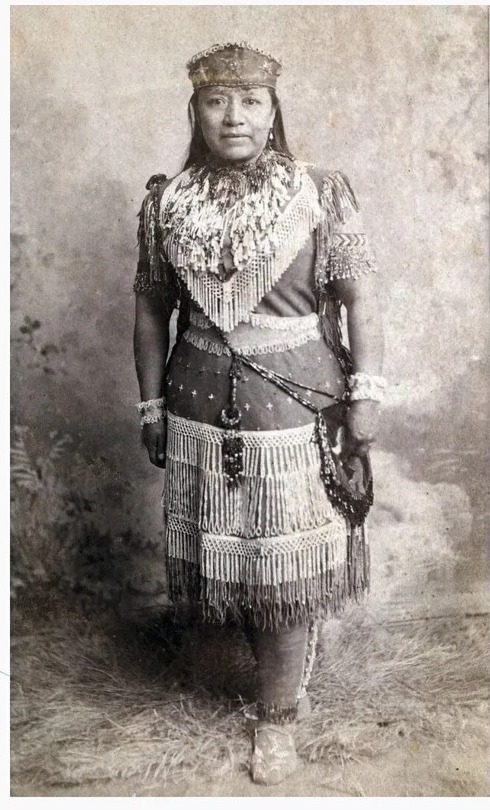
Dignity sold, and death received. Because of their standing, Sarah’s family spent years performing in the white world as the Paiute royal family, living by being looked at. US troops at the time repeatedly harassed Indigenous communities to remind them who was in charge. In 1865 a cavalry unit carried out an indiscriminate attack in northern Nevada on a Paiute band, killing twenty-nine of thirty people — elders, women and children, and Sarah’s mother among them.
The pen as a blade. In 1871, at twenty-seven, Sarah became an advocate for Native American rights, travelling across the United States describing her people’s position to Anglo-American audiences. In 1883 she published Life Among the Piutes: Their Wrongs and Claims, documenting in detail what white settlers had done to the Paiute and the deep corruption of the Indian agents of the period (see the note on the Indian agency system at the end). It is considered the first autobiography written by a Native American woman. The anthropologist Omer Stewart called it one of the earliest and most enduring ethnohistorical works by an American Indian woman.
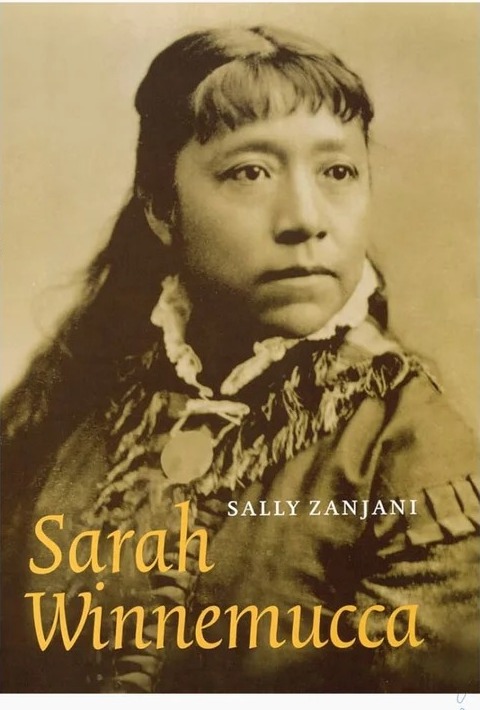
An advocate on her own. Sarah spent years on the eastern lecture circuit, speaking in a buckskin dress to white audiences about what her people were suffering, and for a while she caused a sensation. She was also misunderstood by her own people, who saw her earlier work as a scout for the US Army as a betrayal, while the white government listened in public and never kept its promises. Whatever else is true, this Paiute woman gave up the settled life she could have had and chose to stand in the gap between two worlds, spending everything she had to secure reservation rights for her people.
2. Zitkála-Šá (1876–1938)
A boarding school survivor who exposed the violence of civilising.
Zitkála-Šá, also known as Gertrude Bonnin, was a gifted violinist, writer and political activist. Her name is Lakota and means Red Bird. She was born on a reservation to a Dakota mother and a French father who abandoned them shortly after her birth. As a girl she was taken by missionaries into a religious boarding school run by the colonists, where she was forced to give up her nation, her culture and her memory. Her sharpest weapon was her writing about exactly that.
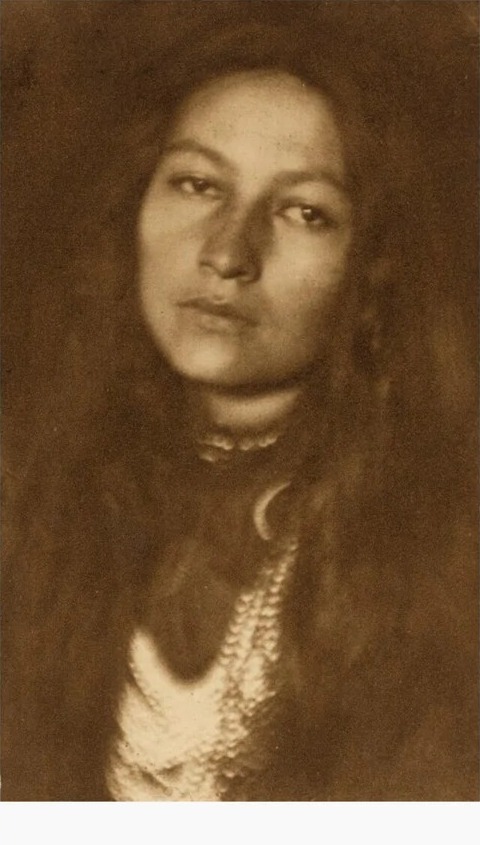
The cutting of the hair. In American Indian Stories she recorded being taken to a white boarding school at eight. In Dakota culture, short hair belonged to cowards and to mourners. Tied into a chair, feeling cold blades against her neck and watching her hair fall, she described herself as a small animal driven by a herder, with her spirit gone.
Education designed to demote. Schools for Native Americans at the time were intended to assimilate them into mainstream white culture, and — more to the point — policy trained Indigenous children only for low-grade manual work, on the assumption that Indigenous people could not enter respectable society and would return to rural life in any case. The colonists’ slogan was kill the Indian, save the man: on their view, whatever was Indigenous in a person was backward and uncivilised. Zitkála-Šá’s writing is what exposed that cultural genocide.
From survivor to organiser. She was not domesticated by civilising. She turned the English and the music she had been taught into weapons. She helped found the Society of American Indians, worked for Indigenous citizenship rights, and spent her life attacking the kill-the-Indian educational system — demonstrating that keeping an Indigenous identity and holding a modern intellect are not in conflict.
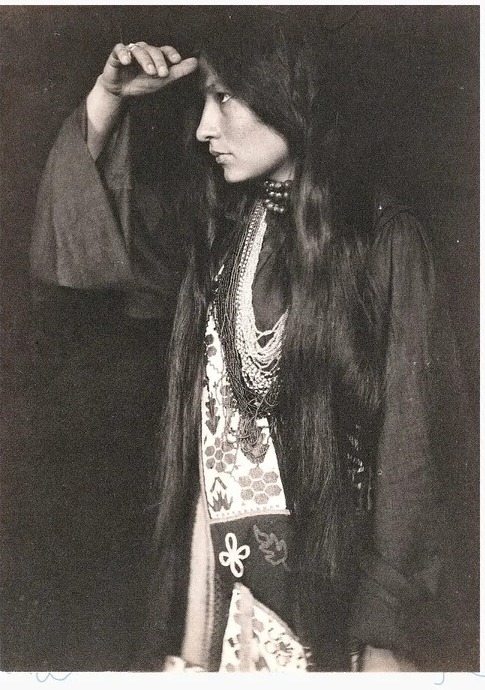
The first Indigenous opera. In February 1913 The Sun Dance Opera, which she created, was staged; in 1938 it was produced at a Broadway house and became that company’s opera of the year. She made it with the American composer William Hanson — who, when it was later staged, removed her name and took the credit for giving Native Americans a voice. The Sun Dance is a traditional Indigenous ceremony, and it is one of the sources of inspiration for our own story.
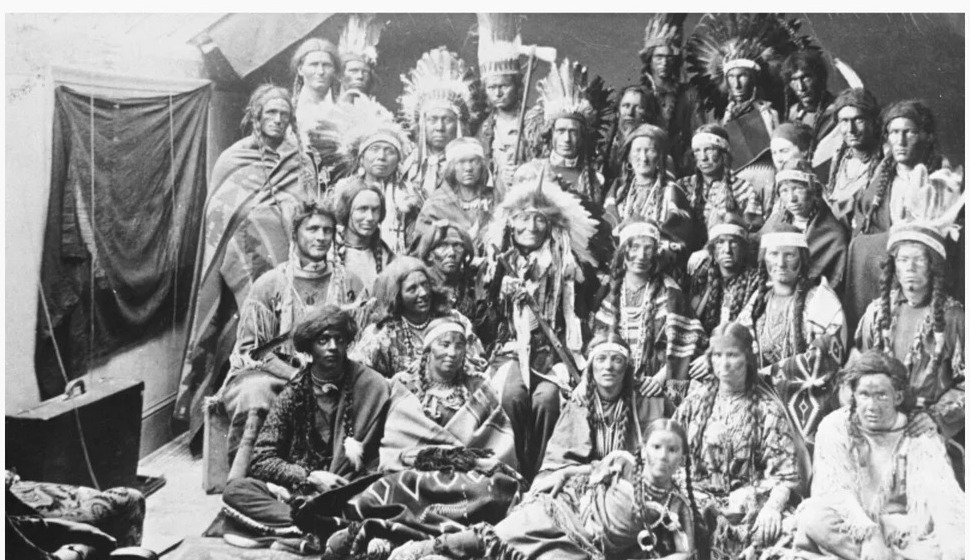
3. Other Indigenous women who spoke
Sophia Alice Callahan (1868–1894) — her novel Wynema, a Child of the Forest is considered the first novel written by a Native American woman. About six months before it was published, the Wounded Knee massacre took place at Pine Ridge, where the Seventh Cavalry killed Lakota people. Callahan put the event into the book, recording the massacre in fictional form.
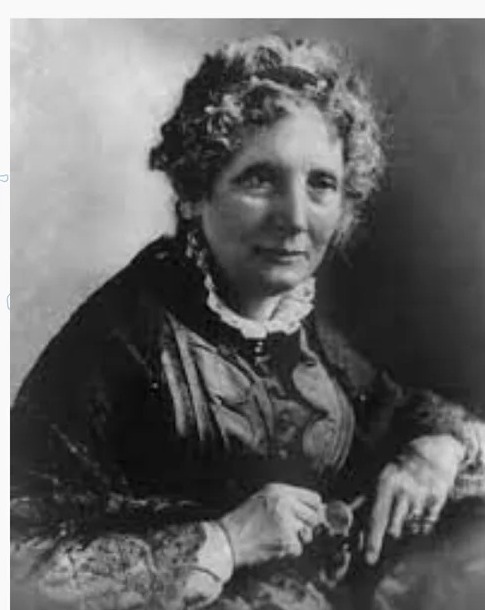
Susette La Flesche Tibbles (1854–1903) — an Omaha writer, translator and civil rights activist, born Inshata Theumba, Bright Eyes, and an early figure in the fight for Indigenous legal personhood and citizenship. After the Ponca chief Standing Bear was arrested in 1879 she worked to secure him legal help and served as court interpreter, helping the court establish for the first time that an Indian is a person within the meaning of the law, which set a basic guarantee of personal rights for Indigenous people. After the case she lectured widely as Bright Eyes, arguing for Indigenous rights.
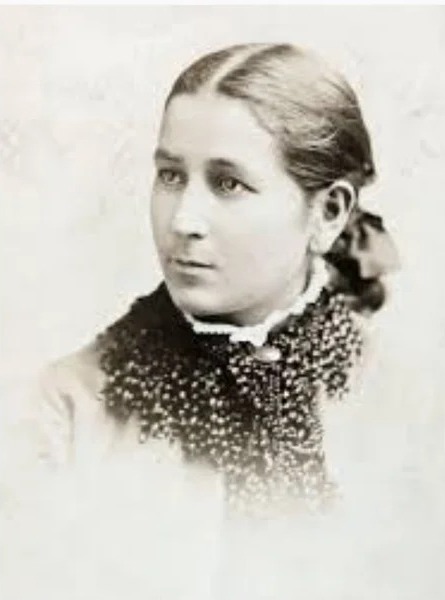
Mourning Dove (c. 1884–1936) — an Indigenous writer and collector of folklore, widely regarded as the first Native American woman to publish a novel. In 1927 she published Cogewea, the Half-Blood: A Depiction of the Great Montana Cattle Range, which takes up a theme common in early Native American fiction: the position of mixed-race children. The typical such child had an Indigenous mother and a white father, many of these unions arising from relationships between fur traders or trappers and Indigenous women; they lived between white and Indigenous culture and were pushed out by both. This is one of the sources for Jose in our story, who survives in the gap as both a woman and mixed-race.
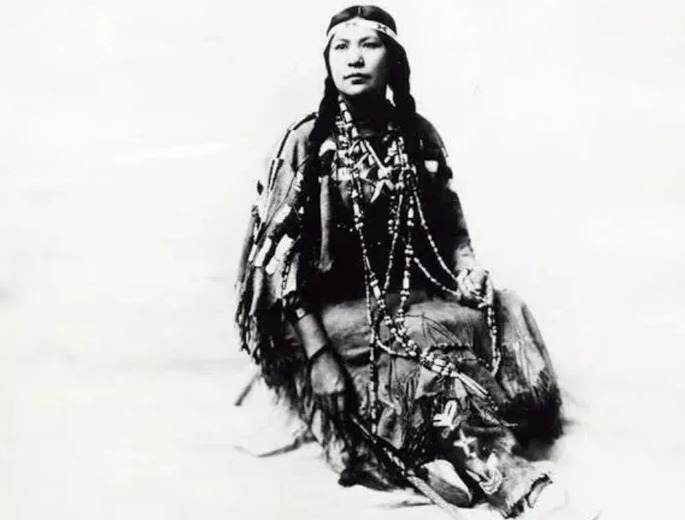
Appendix: the Indian agency system
This was the severe administrative apparatus the United States and Canadian governments used from the nineteenth into the early twentieth century to manage and assimilate Indigenous peoples and to govern the reservations. Under it, federal officials known as Indian agents were posted onto reservations to rule in the government’s place, exercising close to total control over Indigenous life.
Further viewing: the film Killers of the Flower Moon.
Background to the fiction
This note is research for the original novel Western Story, set in the American West of 1875. The companion piece is The Native Blade. The Chinese original of this article is at 印第安的笔.