Keepers of Rome's Sacred Fire: What Were the Vestal Virgins?
The Vestal Virgins guarded Rome's sacred fire. How they were chosen, what privileges and prohibitions came with the office, and how it finally ended.
The Vestal Virgins were Rome’s senior female priesthood, charged with keeping the state’s sacred fire alight. They were selected as children, served for thirty years under a vow of chastity, and in exchange received something no other Roman woman had: legal independence from any man. Here is what the office actually involved, and how it differed from the nuns and shrine maidens it is often compared to.
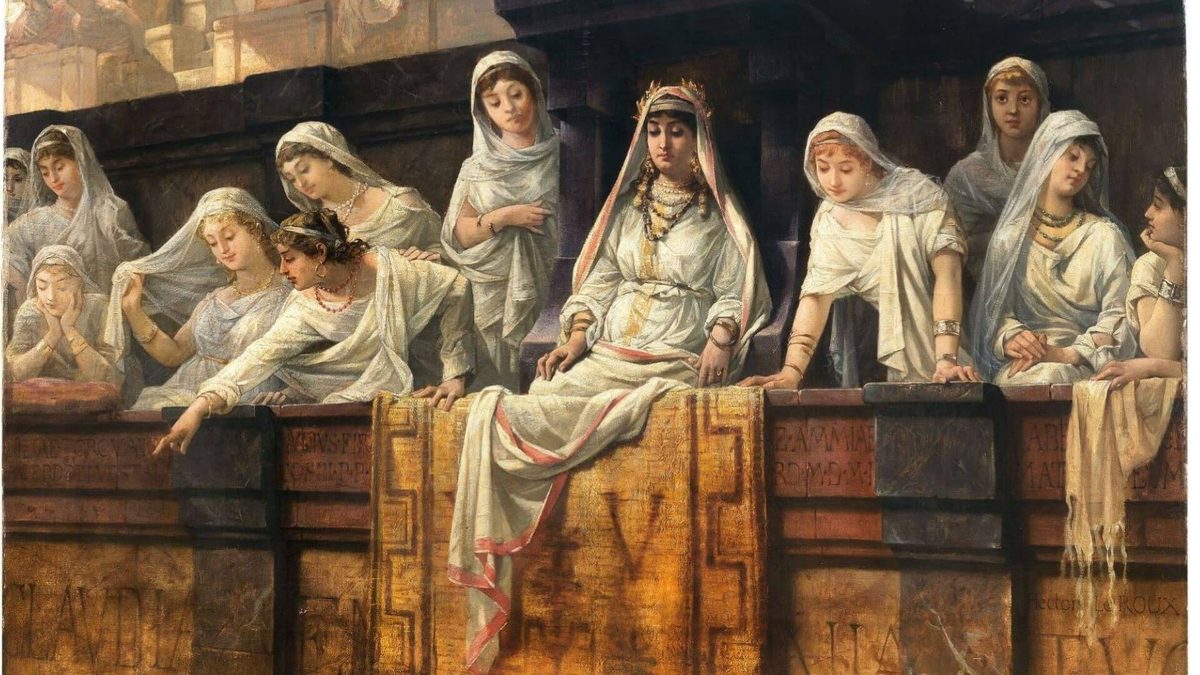
1. What was a Vestal Virgin?
Vesta and the eternal flame
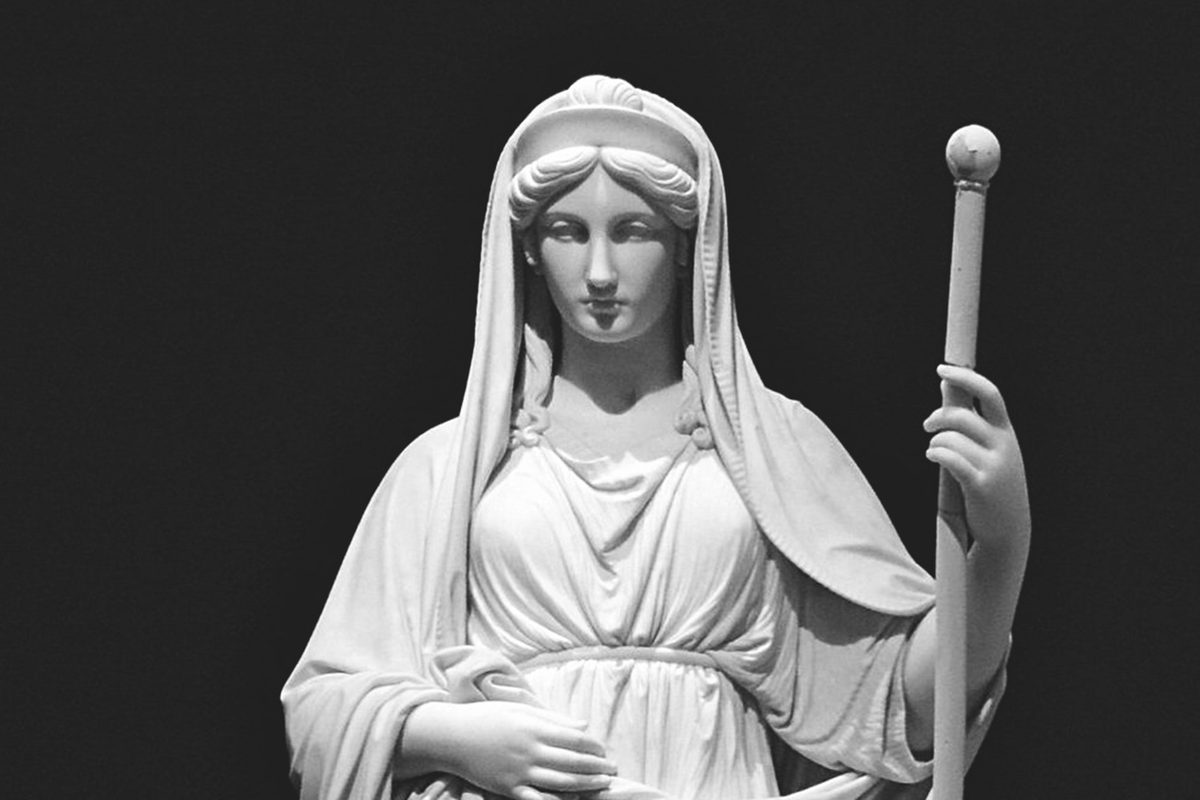
Vesta was the Roman goddess of the hearth and the household, and fire was the visible form of the contract between Rome and its gods — the pax deorum. The Vestals were the senior priestesses who served her and guarded the fire of the Roman state.
From girl to Vestal: selection and entry
Vestals were usually chosen between the ages of six and ten, against strict criteria: both parents living, and no physical defect. Candidates were drawn from Rome’s upper class by the Senate and the Pontifex Maximus. Once chosen, the Pontifex Maximus formally took the girl from her home — and from that moment she was severed in law from her birth family, permanently released from all male guardianship, and bound to serve the goddess for thirty years.
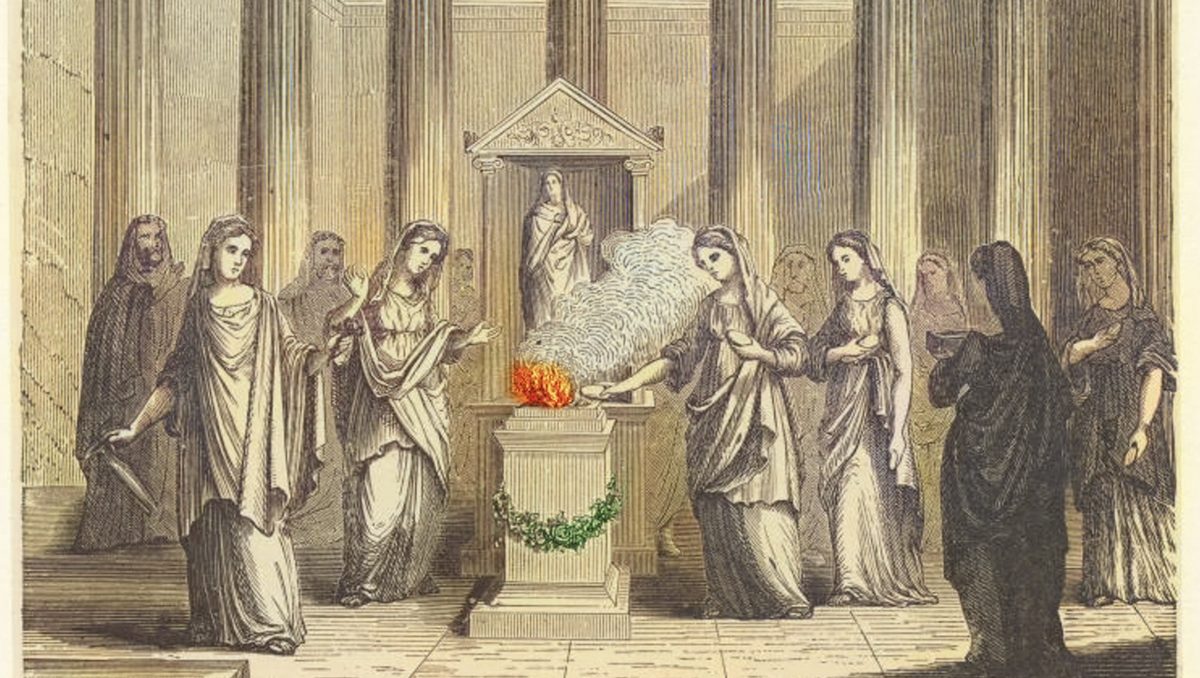
The foundation of the city’s survival. Their central duty was to keep the fire in the inner sanctum of the Temple of Vesta burning day and night. Romans believed this flame was the literal embodiment of the city’s vitality and safety. If it went out, Rome had lost the protection of the gods, and the city would fall with it.
The vow. For those thirty years they were bound to chastity. Their bodies and their energies were understood to have been given entirely to the Roman state, and so could not belong to any household or marriage.
2. An island of power outside the law: Rome’s professional elite and its independent women of means
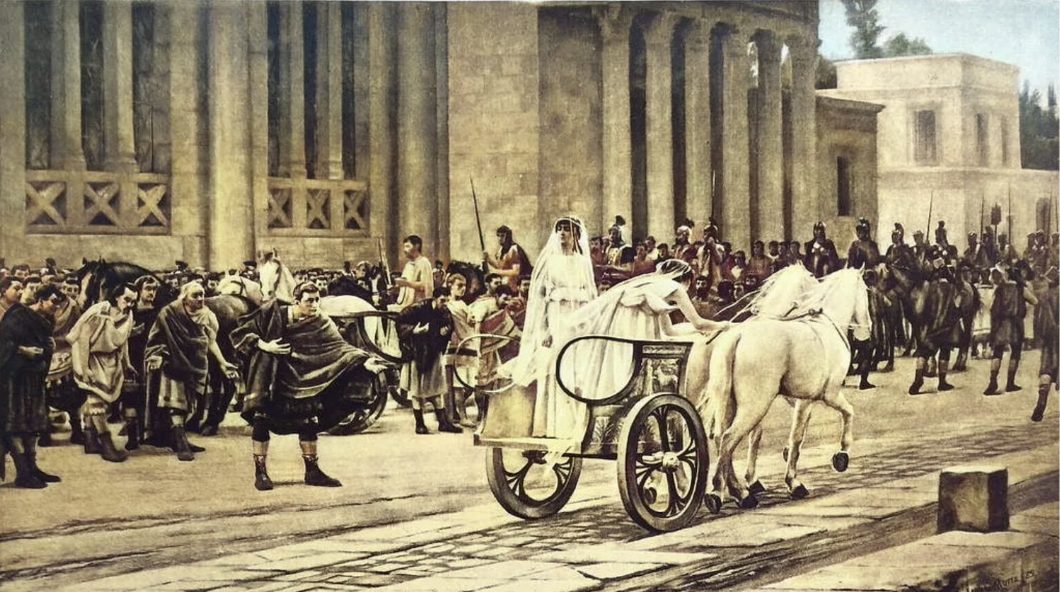
Complete legal autonomy. From the moment a girl became a Vestal she stood outside the control of any father or family — outside patria potestas — with no manumission procedure required, no loss of rights, and with the power to make a will of her own.
The state archive and Rome’s highest notary. The Vestals carried diplomatic and legal functions at the very top of the Roman state. Because their standing was sacred and their neutrality absolute, Rome’s most secret documents, its important international treaties, and the final wills of its nobility — including those of the emperors — were all deposited with them, to be read out to the Senate when required.
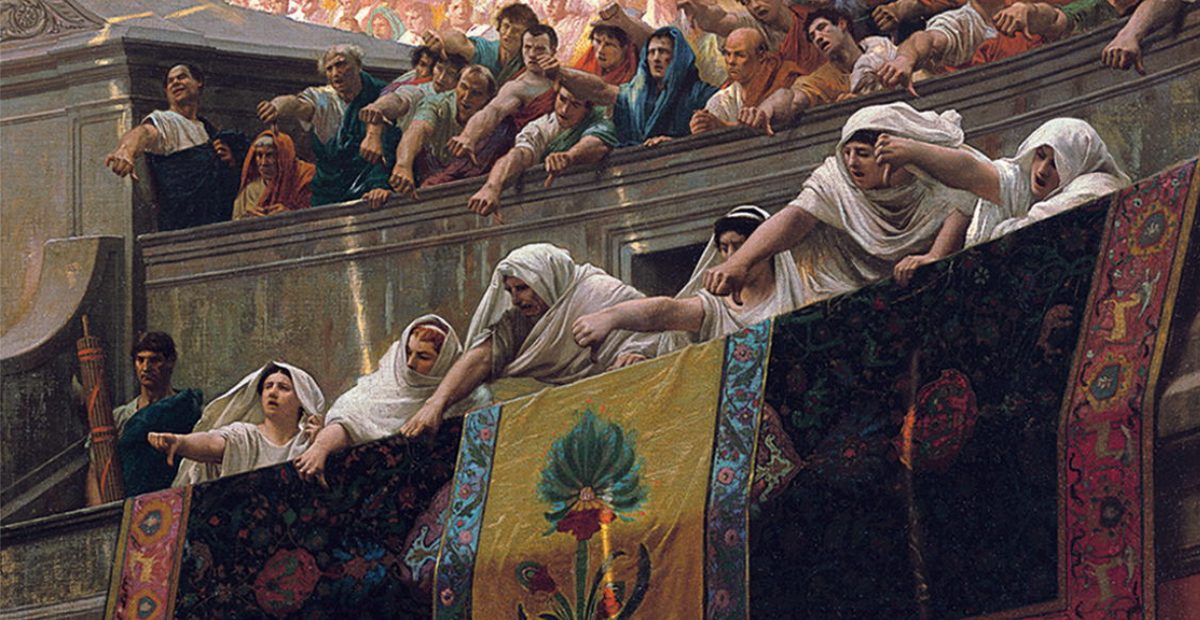
Social privilege and political weight. They had reserved seats of honour in public spaces such as the Colosseum. In periods of civil war or political crisis they acted as peace envoys, and their word carried weight that even the most powerful men had to respect. None of this power came through relatives or a family name. It came directly from the fact that they symbolically were the city of Rome.
What the sacred status cost
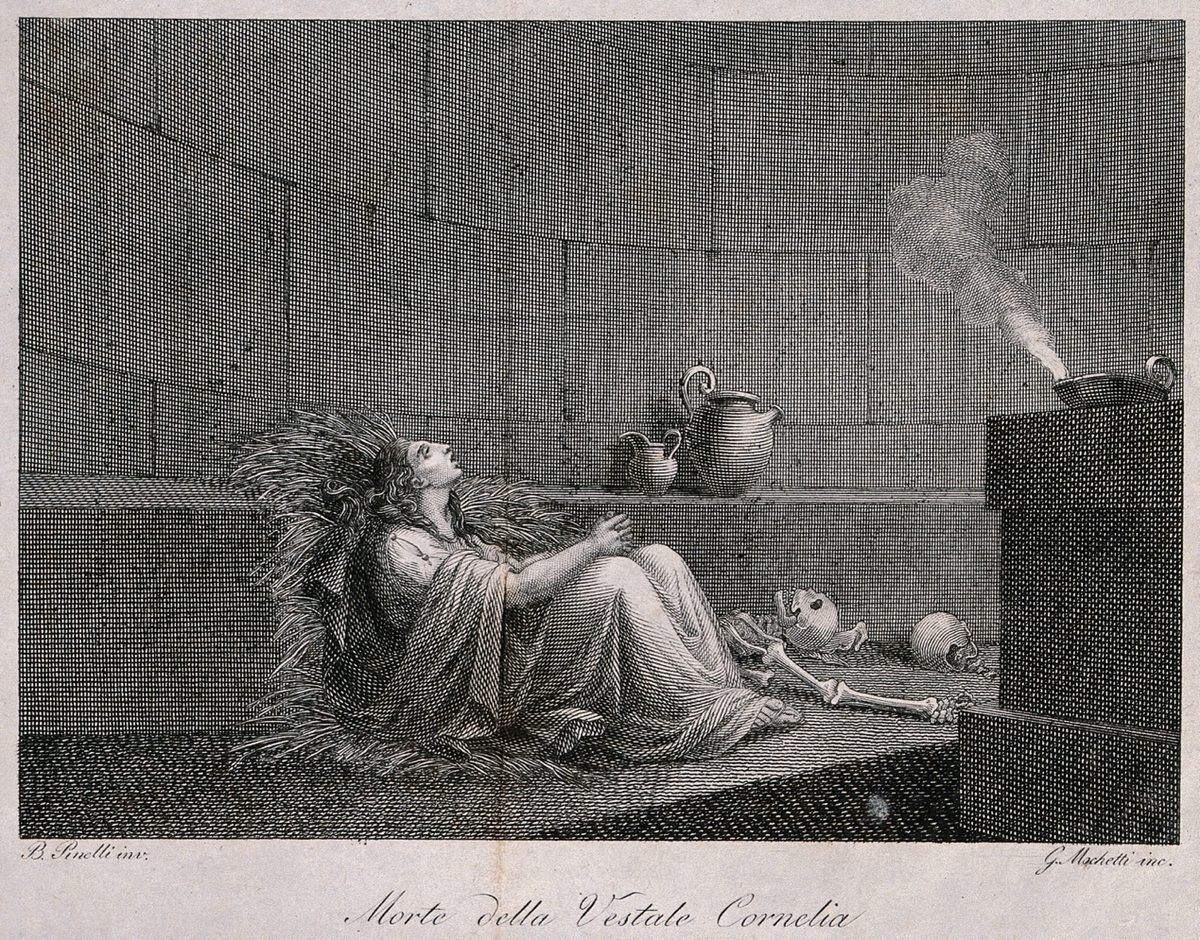
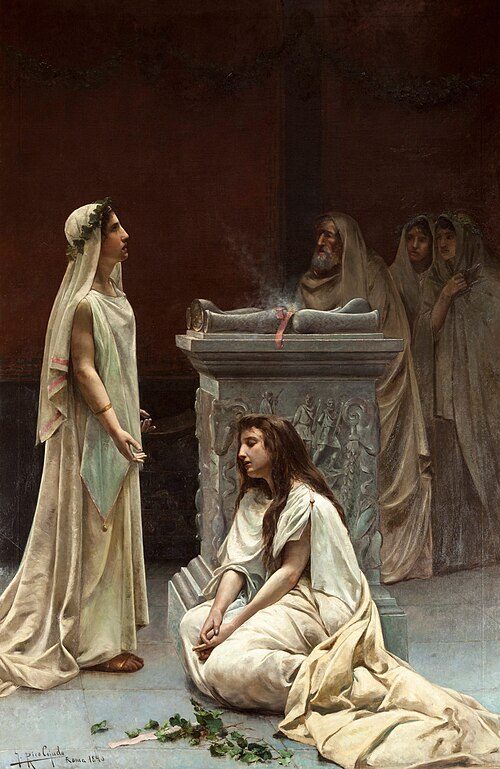
Punishment came in two forms. If the fire on your watch went out, you were beaten with rods. If the vow of chastity was broken, the penalty was far worse: burial alive in an underground chamber, with no blood shed — because a Vestal’s blood was sacred and could not be exposed to a blade. Her accomplice was beaten to death in public in the forum.
3. Actors in the current of history: some famous Vestals
Across a priesthood that lasted a thousand years, a number of these women left marks at Rome’s sharpest turning points.
Rhea Silvia — the Vestal at Rome’s origin
In myth, Rhea Silvia was the daughter of King Numitor, forced into the priesthood by a usurping uncle precisely so that no legitimate heir could be born. She then conceived by the war god Mars and bore Romulus and Remus, the founders of the city. The Vestal office sits at the centre of Rome’s foundation myth, and that is where its sanctity was established from the very beginning.
Occia — at the helm from Republic to Empire
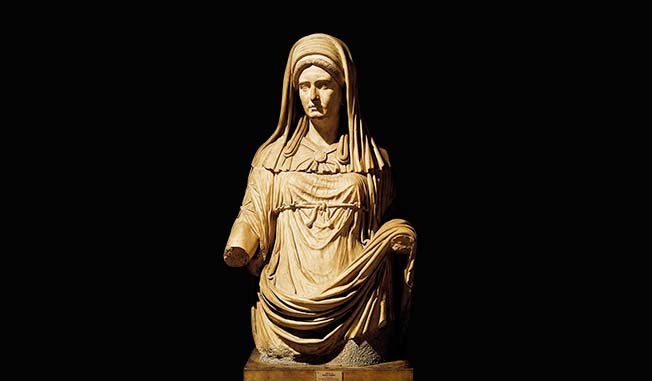
Occia served as chief Vestal, Virgo Vestalis Maxima, for fifty-seven years, beginning around 38 BC. Her tenure therefore spans the most violent political rupture in Roman history: the civil wars after Caesar’s assassination, Octavian’s defeat of Antony and Cleopatra, the formal founding of the empire, and the whole of Augustus’s reign.
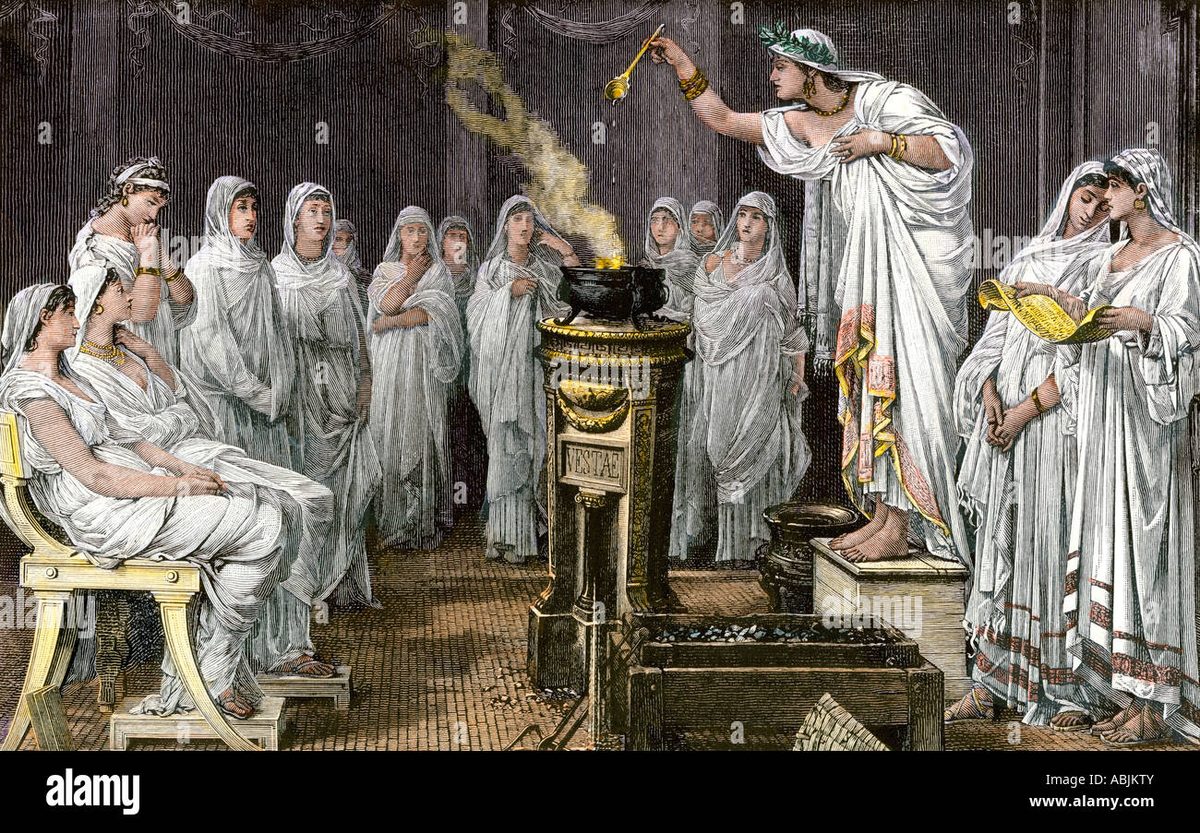
What is striking is that the Temple of Vesta was the only institution of the Roman state to maintain unbroken institutional continuity across all of it. Whoever held power, whoever killed whom, whoever overthrew whom — Occia and her temple went on holding the emperors’ wills, keeping the state archive, and keeping the fire alight. Fifty-seven years of one woman’s tenure carried that continuity personally.
Coelia Concordia — the last chief Vestal
Coelia came from a plebeian family and rose through the order to become its head, Vestalis Maxima, one of the highest positions in Roman religion and society. Archaeologists found the base of a statue of her on the Esquiline Hill in Rome; the inscription records that it was erected for her by another prominent aristocratic woman, Fabia Paulina.
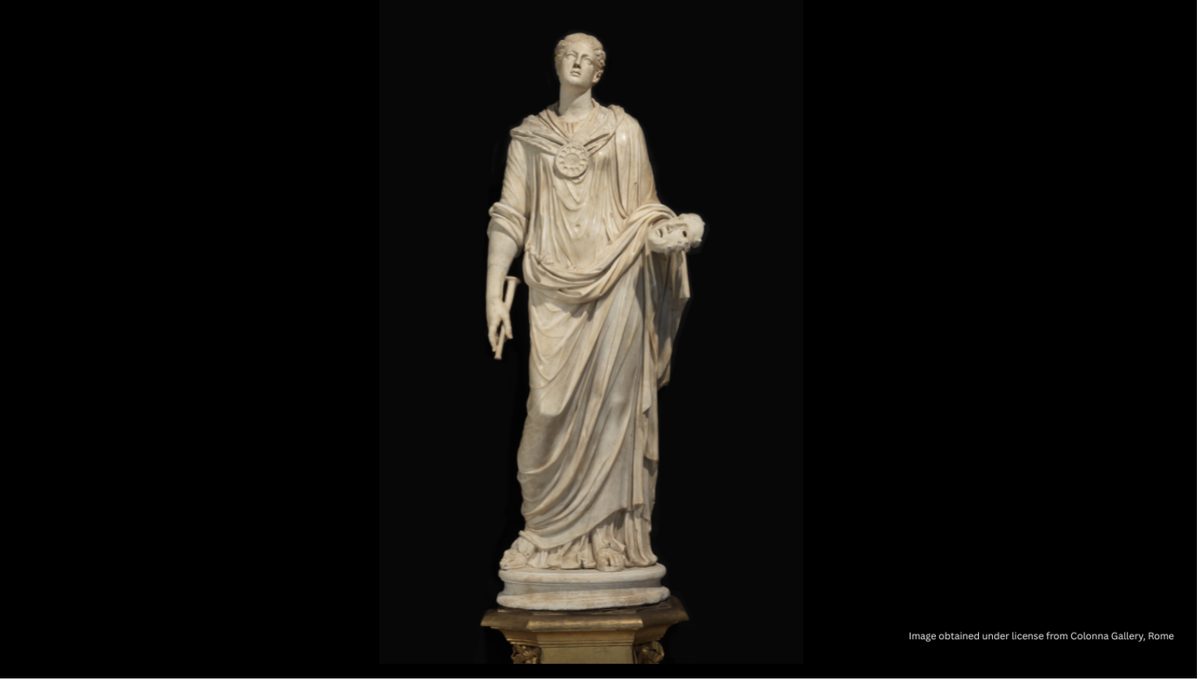
Around AD 394 the Christian emperor Theodosius ordered Vesta’s fire extinguished and the order formally dissolved. A flame that had burned in Rome for a thousand years went out. Less than fifteen years later, in AD 410, Alaric and the Visigoths sacked the city, and the old prophecy came true after all. Coelia — the woman who had once made Rome’s promise to its gods on the city’s behalf — watched everything she had guarded come to an end.
Afterword
History left very little of these women’s inner lives. We know they kept the fire, that they held an unusual position, and that they appear at a number of decisive moments. How they actually lived through those long quiet years, and how they treated one another, almost nobody wrote down.
Which may be exactly why there is room to imagine it. Thirty years in each other’s company, guarding a single flame, spending the longest stretch of a life together — what happened inside that temple of theirs?
Claudia was born out of that question. She is the chief Vestal and also a living person: she has power, and she has attachments she cannot simply put down. She had a sister, a daughter, people she wanted to protect — and the fire stands between her and all of it. The flame is her power and her cage at once.
Background to the fiction
This note is research for the original novel Death of a Gladiatrix, set in Trajan-era Rome. The Chinese original of this article is at 罗马的圣火守护者:维斯塔贞女.