The Woman Who Touched the Sea of Stars: Valentina Tereshkova's Three Days Beyond the Earth
In 1963, 26-year-old Valentina Tereshkova flew alone into space aboard Vostok 6, spending 70.8 hours in orbit and circling the Earth 48 times, the first woman ever to go to space. What does weightlessness do to a body that grew up on Earth? And the photographs she took of the atmosphere's edge through her porthole later became data for the study of atmospheric aerosols.
In 1963 Valentina Tereshkova, then 26, flew alone into space aboard the Vostok 6 spacecraft and lived for nearly three days beyond the Earth, the first woman in history to go to space. In a body shaped by the Earth’s gravity over hundreds of thousands of years, she went through weightlessness and a sunrise or sunset every forty-five minutes — and through her porthole she photographed the edge of the atmosphere.
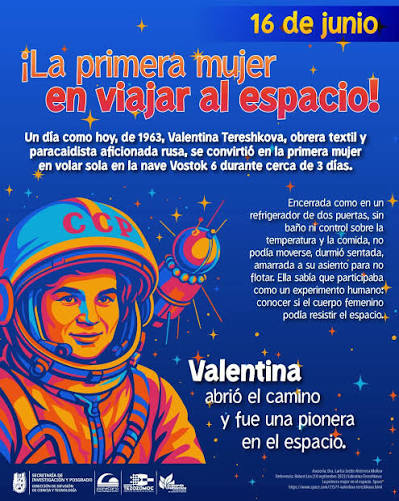
1. Looking up at the sea of stars
For a very long time, human beings looked up at the stars again and again.
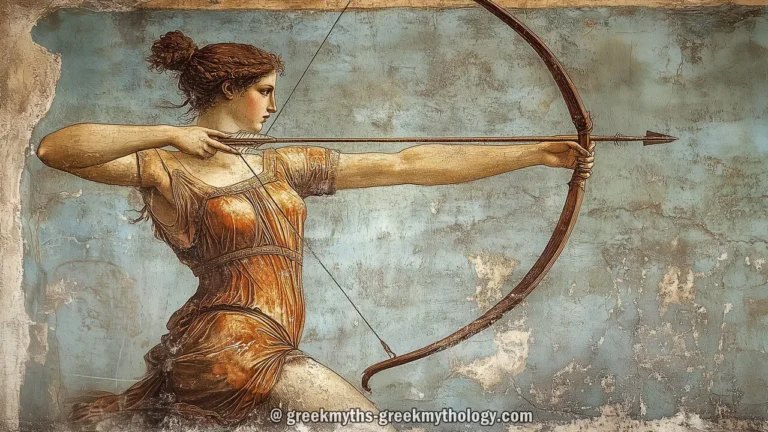
Back then they stood on solid ground and watched those flickering cold lights. They dreamed of how vast the sea of stars must be; they imagined Chang’e soaring up towards the moon, and Artemis, the goddess of the hunt, turning the crescent moon into a silver bow as she ranged across the wild.
In the old myths these women were light and free, explorers the earth could not hold down.
But however grand our dreams, those of us born on Earth have always been anchored fast by gravity.
Hundreds of thousands of years of evolution have accustomed our bones, our blood and our muscles to the weight of the Earth. What is space really like? Once a body raised on Earth is flung into the weightless void, what does it actually go through?
2. Slipping gravity’s anchor
The fact is that human bones, muscles and blood — even the fine water-filled tubes inside the inner ear that keep us balanced — evolved on this rocky planet under hundreds of thousands of years of gravity’s pull.
Our flesh is born carrying the imprint of the Earth’s gravity.
And in 1963 a 26-year-old cosmonaut, Valentina Tereshkova, climbed into a spherical metal capsule just over two metres across.
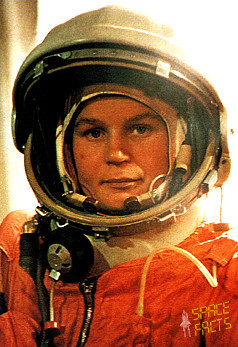
As the rocket roared free of the Earth’s pull, the Earth below her shrank little by little until it was a blue marble hanging in a boundless black curtain.
She was going to live beyond the Earth, alone, for three whole days.

3. A sunrise and a sunset every ninety minutes
When the spacecraft reached orbit, weight vanished in an instant.
Weightlessness is not some light, romantic floating; it is a violent physiological rebuilding. Body fluids are no longer pulled towards the legs but surge towards the head; the gyroscope the brain uses to sense up and down stops working altogether, and the sense of direction is simply wiped out in the void.
But what came with it was a spectacle beyond anything.
Tereshkova’s craft was racing around the Earth at more than twenty thousand kilometres an hour, completing an orbit roughly every ninety minutes.
That meant that beside her, outside a tiny porthole, a magnificent sunrise or sunset played out every forty-five minutes.
Vast continental plates, deep oceans and the curling cloud of typhoons unrolled before her eyes again and again, like a film on an endless screen.
4. Everyday Earth, without its weight
Living in space overturns even the simplest common sense about staying alive.
How do you eat? There can’t be a single crumb of bread in here, or it will fly around the cabin and might even be breathed into the windpipe with fatal results.
All she could do was squeeze a specially made liquid food out of an aluminium tube into her mouth, a little at a time, like toothpaste.
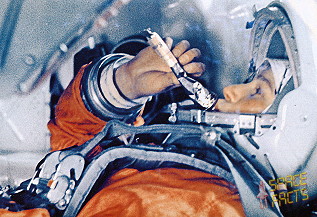
How do you sleep? There is no such thing as lying down, and there is no bed. She had to strap herself firmly into her seat so she would not drift about and knock into things in the cabin once she fell asleep.
And the menstrual cycle, the one that belongs to women? The long history of spaceflight since has shown that the womb, evolved under the Earth’s gravity, keeps to its rhythm steadily and robustly in weightlessness too.
The real challenge is one every human shares: in days without gravity to push against, calcium quietly drains from the bones, and muscles, with nothing to do, rapidly go slack.
Her body, standing in for the human body, was feeling its way towards a whole new set of rules for survival in an extreme vacuum.
5. The recorder who faced the abyss alone
Over a journey of 70.8 hours, Tereshkova circled the Earth 48 times.
Through almost three days of alternating day and night she neither flinched nor lost her way. Alone, with the brilliant home planet on one side and the bottomless black curtain of the universe on the other, she carried out her observation tasks with great calm.
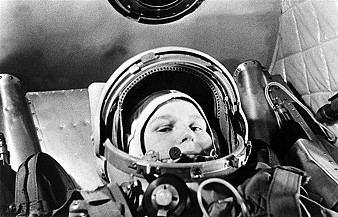
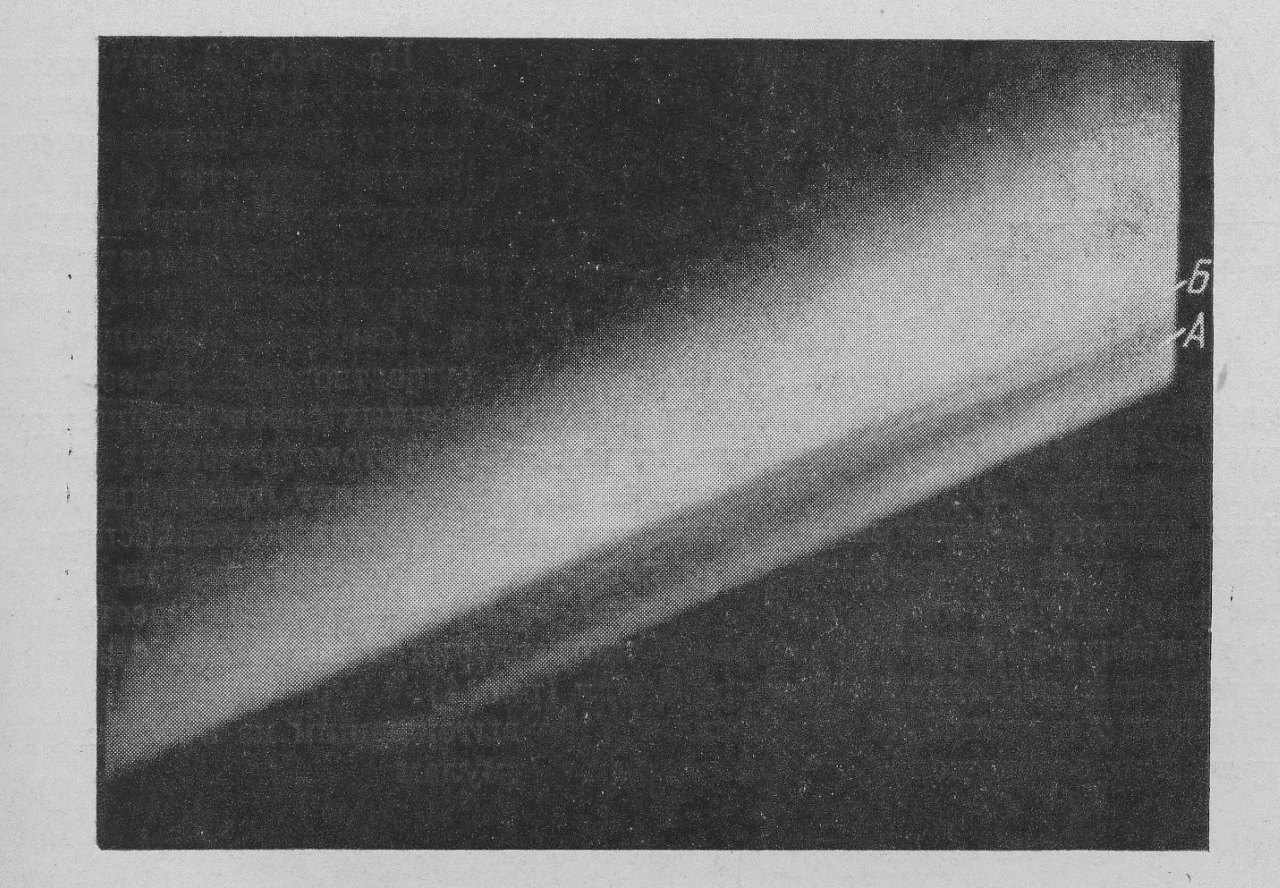
She picked up a camera and, through the thick glass, took a great many precious photographs of the edge of the Earth’s atmosphere.
Those images, made with a sharp observer’s eye, later became important data for scientists studying atmospheric aerosols.
PS: by the way, I looked it up — the first American woman to go to space was Sally Ride, in 1983.
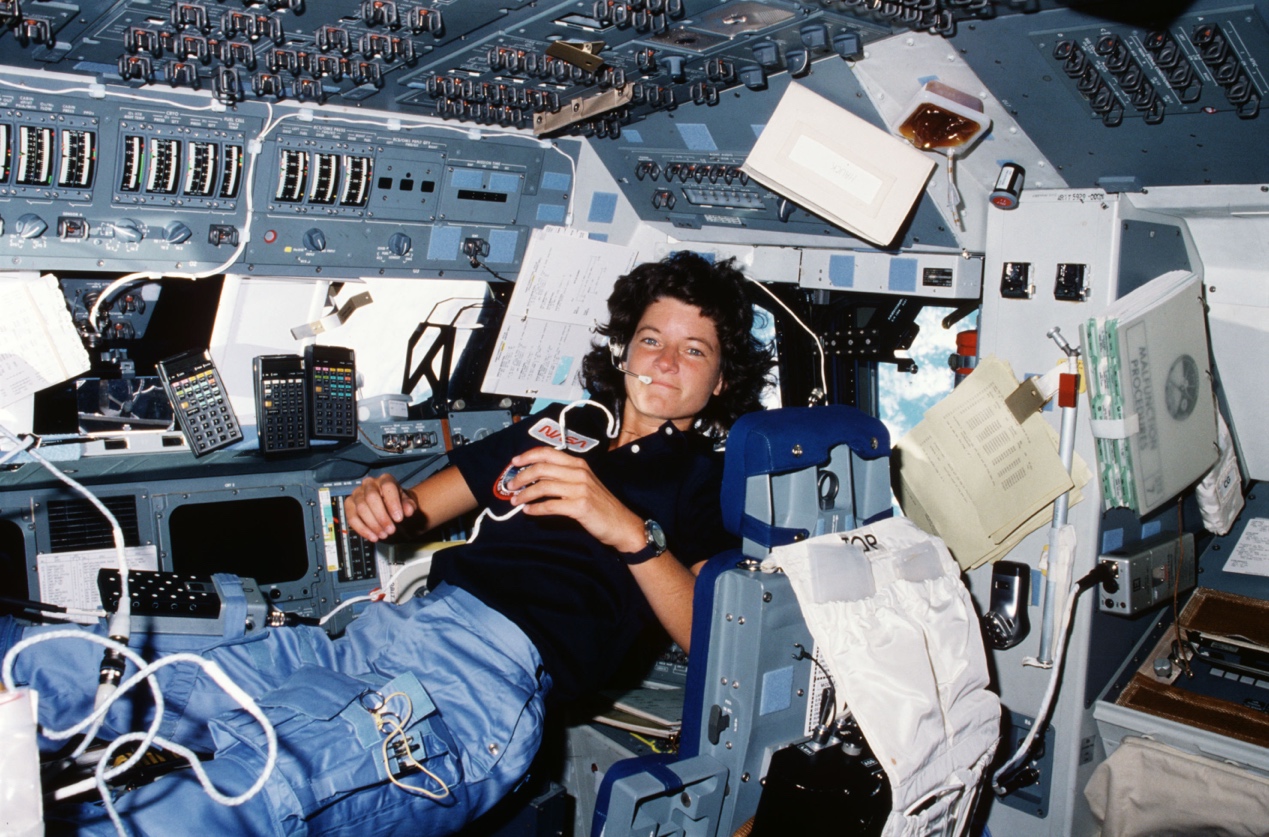
Image sources
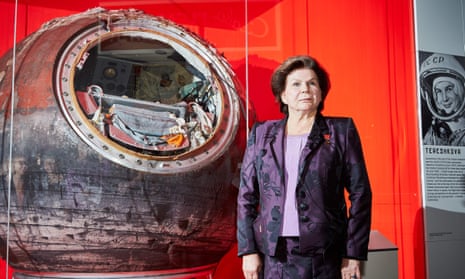
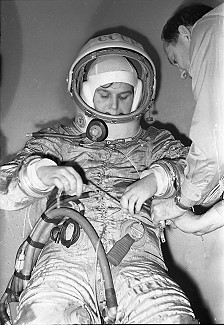
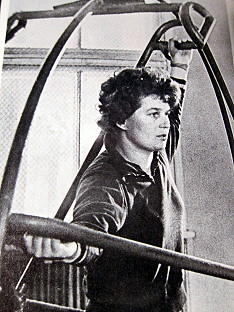
The images in this article are gathered from public sources. The poster at the top is a Spanish-language commemorative poster made for the anniversary of the flight of 16 June 1963. The illustration of Artemis comes from a website on Greek mythology and still carries that site’s watermark. The portrait of Tereshkova in her orange spacesuit and the in-flight picture of her holding a food tube are taken from the spaceflight reference site Spacefacts, whose mark appears on them; the black-and-white photographs of her suiting up, in training and in the cabin are public historical photographs, and the banner with her name on it is a promotional image circulating online. The photograph beside the Vostok 6 capsule was taken while the capsule was on public display. The atmosphere photograph is Tereshkova’s own, taken during the flight and reproduced here from a printed publication of the time. The photograph of Sally Ride is NASA’s public photograph from the 1983 STS-7 mission.
Background to the fiction
This note is research for the original novel Before the Goliath Sinks, and the third in the series Women and the Sea of Stars; the first two were on Henrietta Leavitt and Annie Jump Cannon. Leavitt measured the stars and Cannon gathered them up, both of them reading the universe from the ground, at a glass plate; Tereshkova was the first to take a woman’s body off the ground and go and touch that sea of stars. The Keibir of the novel have wandered between the stars for generations and never seen their home — and it is only once a person has left the Earth that she sees the whole of it for the first time. The Chinese original of this article is at 触碰星海的女人.