The Woman Who Measured the Stars: How Henrietta Leavitt Made a Ruler for the Universe
How do we know how far away the stars are? In 1912, working on glass plates at the Harvard Observatory, Henrietta Swan Leavitt found the period–luminosity relation of Cepheid variables and turned a flickering rhythm into a ruler for the cosmos — and the Nobel nomination never reached her.
When you look up at the stars, you are facing the same problem everyone has always faced: a star that looks faint — is it really only a small night-light, or is it a blinding searchlight that happens to be very, very far away?
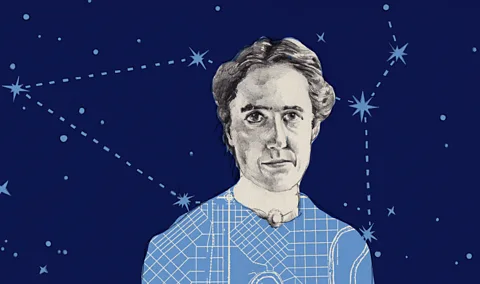
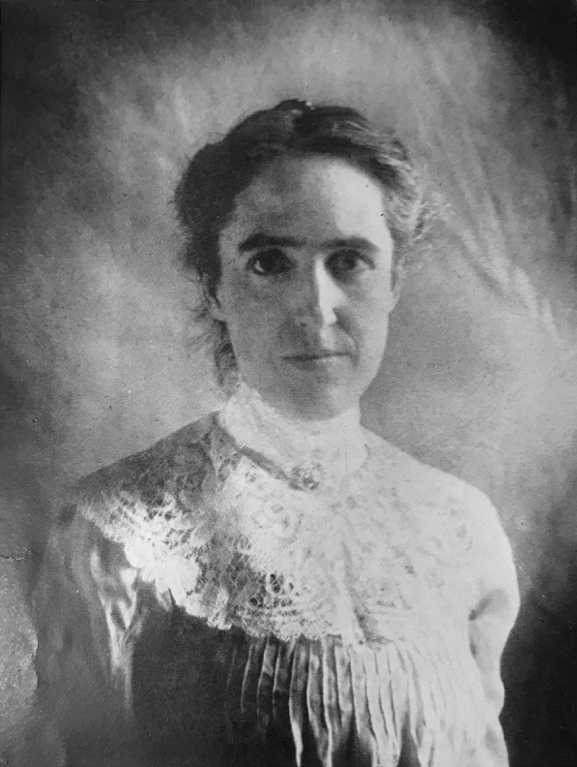
If you do not know how bright a star actually is, you can never work out how far away it is. That deadlock was broken by an astronomer named Henrietta Swan Leavitt. At a desk in the Harvard College Observatory, using nothing but the rhythm of stars flickering on glass plates, she gave humanity its first ruler long enough to reach into deep space.
1. The dilemma in the night sky: how far away are they?
Some stars look bright and some look faint. But the brightness your eye reports is two completely different things mixed together: how much light the star actually gives off, and how far away it is.
For a long time, looking at the universe was like looking at a flat backdrop. We could see the light; we could not reach the distance behind it. To turn that backdrop into a space with depth, you first had to find a kind of star whose real brightness you could read off at a glance.
2. Counting the heartbeats of stars on glass plates
The turning point happened at an ordinary wooden desk.
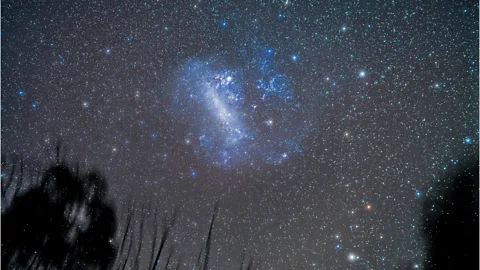
Leavitt’s daily work was to study stacks of black-and-white glass plates with a magnifying glass. The plates recorded, in dense detail, the stars of one cloud in the southern sky: the Small Magellanic Cloud. She was one of the women the Harvard Observatory hired to process plates — they were called “computers” at the time, and the work was the most eye-straining and the least visible in the building.
Among many thousands of stars, Leavitt noticed a very particular group: Cepheid variables.
Most stars hold their brightness steady. These seemed to breathe — brightening, dimming, brightening again, on a regular beat. At her desk, Leavitt patiently wrote down the complete rhythm of every one of them.
3. The cleanest judgement she made
Then she made one very clever judgement: since all these variables were crowded into the same distant cloud, their distances from Earth could be treated as roughly the same.
That single step removed distance from the equation. If the distance is the same for all of them, then a star that looks brighter on the plate really is a star that gives off more light.
When she put the data side by side, an extremely elegant pattern jumped out:
- a star with a slow heartbeat (taking many days to brighten and dim) is in reality an enormous lamp;
- a star with a fast heartbeat (flashing every few days) gives off far less light.
How quickly a star flickers gives away its true energy. This is what the textbooks now call the period–luminosity relation. In the 1912 Harvard circular, Leavitt’s own phrasing is remarkably restrained:
A straight line can readily be drawn among each of the two series of points corresponding to the maxima and minima, thus showing that there is a simple relation between the brightness of the variables and their periods.
— Henrietta Swan Leavitt, 1912
4. A yardstick for the sky
After the discovery, measuring distance became as simple as fitting a puzzle together:
- Read the beat. Point a telescope at a Cepheid and count how many days one cycle takes.
- Look up its real brightness. Leavitt’s relation tells you directly how much light the star actually gives off.
- Work out the distance. Compare its real brightness with how faint it looks from Earth, and ordinary physics about how light spreads gives you the distance.
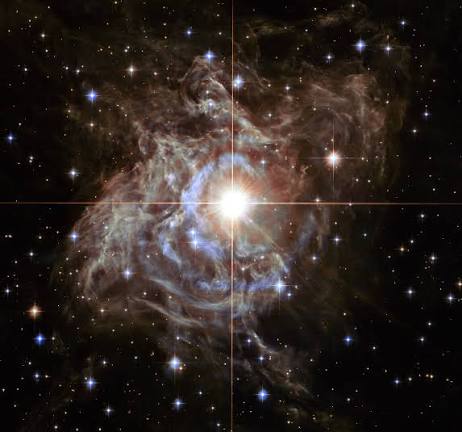
Cepheids became standard lighthouses hung in the depths of the universe. See how fast one flickers and you know its true light.
It was with this ruler that Hubble later measured the Andromeda nebula and proved it lies far outside our own galaxy — the edge of the universe moved outward overnight. And the ruler itself was made by one quiet person.
5. The nomination that never landed
Leavitt’s own life was hard. Not long after she finished her studies she lost her hearing to meningitis. In 1921 she died of cancer.
Not knowing she had died, the mathematician Gösta Mittag-Leffler considered nominating her for the Nobel Prize in Physics, and wrote to Harlow Shapley asking for more detail about her work.
Shapley replied that Leavitt was dead, and claimed the real credit belonged to him, because he had been the one to “interpret” her discovery correctly.
In the end there was no nomination. The Nobel Prize is not awarded posthumously.
Image sources
The images in this article are gathered from public sources. The black-and-white portrait of Leavitt is a public-domain historical photograph; the illustrated portrait is a modern commemorative drawing. The night-sky photograph of the Magellanic Cloud and the image of the Cepheid RS Puppis come from public astronomical photography and publicly released Hubble Space Telescope imagery. The 1912 quotation is from Harvard College Observatory Circular 173, Periods of 25 Variable Stars in the Small Magellanic Cloud.
Background to the fiction
This note is research for the original novel Before the Goliath Sinks, about a people of exiled star cartographers who turn the unknown into certainty for a living — and have never charted their own homeland. Leavitt’s ruler is what “measuring” looks like in real history: one person quietly finishes counting a rhythm, and the universe gets larger. The Chinese original of this article is at 量星星的女人.