The End of the Imperial Map: From Trajan's Scorched Expansion to Hadrian's Memoirs
From Trajan's expansion to its furthest limit to Hadrian's withdrawal and reflection: the Roman background behind the novel Death of a Gladiatrix.
Trajan pushed Rome to its greatest extent, and the empire could not hold it. Within a few years of his eastern campaigns the new provinces were in revolt, and his successor Hadrian gave much of the territory up on purpose — ending, deliberately, the Roman myth of endless conquest. This is the turn our novel sits on.
In the third act, Aelia leaves Rome and travels east with a convoy. Through the carriage window she sees burnt villages, collapsed temples, and prisoners chained together in a line — the victories written up in dispatches, appearing for the first time in another form. Meanwhile, back in the city, people are still celebrating: the Senate is preparing a new commemorative column for the emperor, poets are praising the greatness of the empire, and the cheering in the arena goes on as it always has.
Which raises the question. If Trajan’s reign really was Rome’s most glorious, why did the frontiers start collapsing the moment the wars ended? Why did the newly conquered land fall into revolt so quickly? And why, after Trajan’s death, did Hadrian voluntarily abandon vast territories and personally close out centuries of Roman expansion? To answer that, it helps to look again at the age people call golden.
1. Trajan’s reign: an empire expanded to its limit
In the story, a Roman official announces with pride that the emperor has conquered the east and the Senate is preparing a new column. That is Trajan’s reign, and it is the moment Roman territory reached its greatest extent. Trajan took Dacia, then pressed east, occupying Armenia and Mesopotamia and reaching as far as the Persian Gulf. Rome appeared to have arrived at its most magnificent hour.
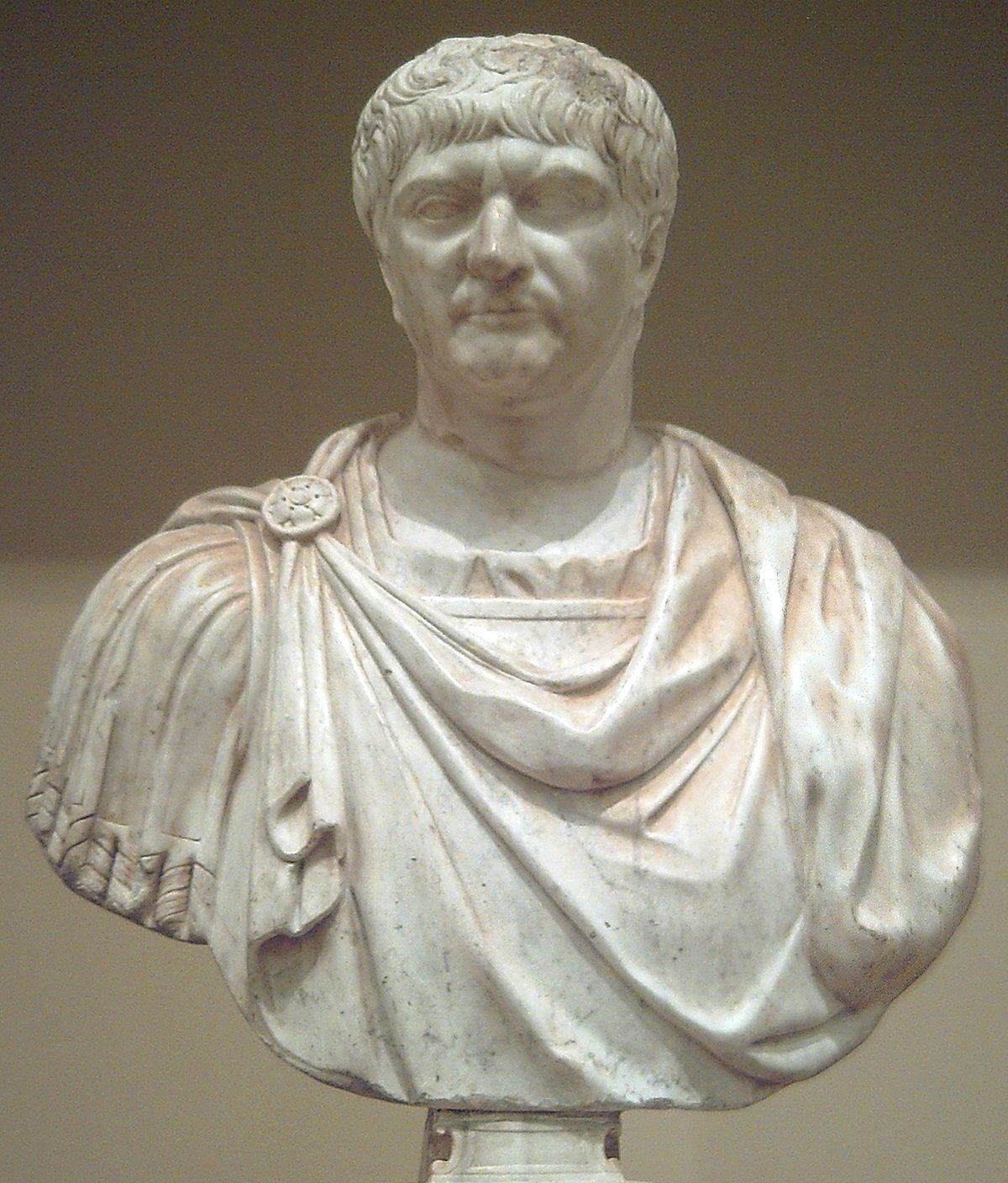
The other side of that magnificence was burnt villages, smashed idols, and captives marched west in chains. What Aelia sees through the carriage window is not the victory on the map; it is the wreckage the victory left.
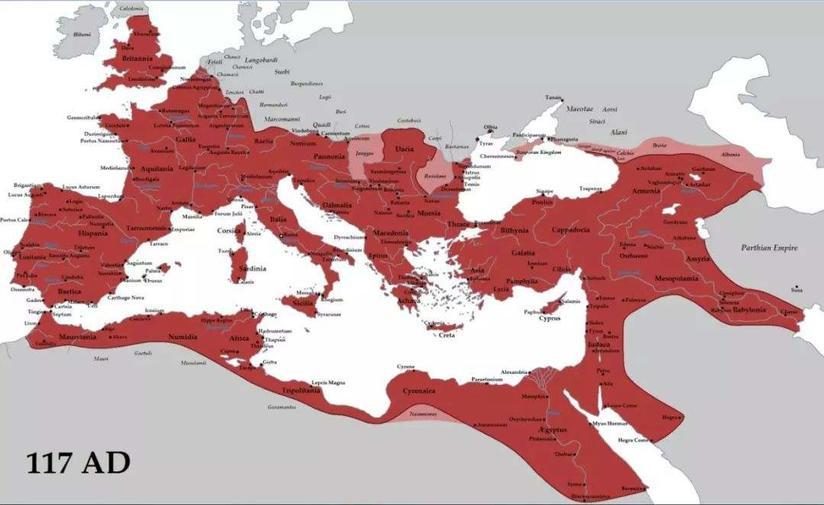
Tacitus wrote the famous line — atque ubi solitudinem faciunt, pacem appellant, they make a desert and call it peace. It is very nearly a summary of Trajan’s eastern campaign.
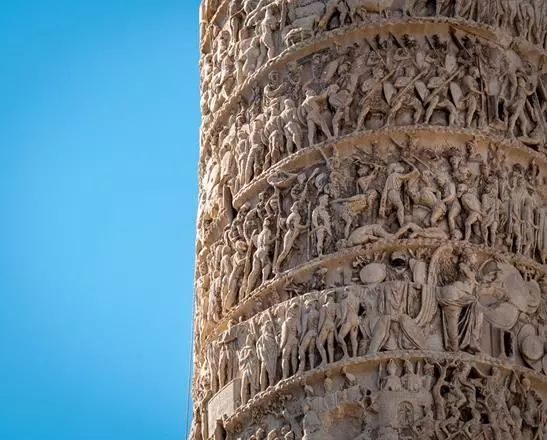
2. The eastern front: land the empire could not swallow
Trajan’s eastern conquests looked grand and were extremely unstable. In the story, a courier’s dispatch signals the collapse: the revolt in newly annexed Mesopotamia is spreading. That is what happened late in Trajan’s reign — imperial control weakened, and territory that had only just been written onto the Roman map began slipping out of Roman hands. Trajan’s expansion may have had no limit; Roman rule did.
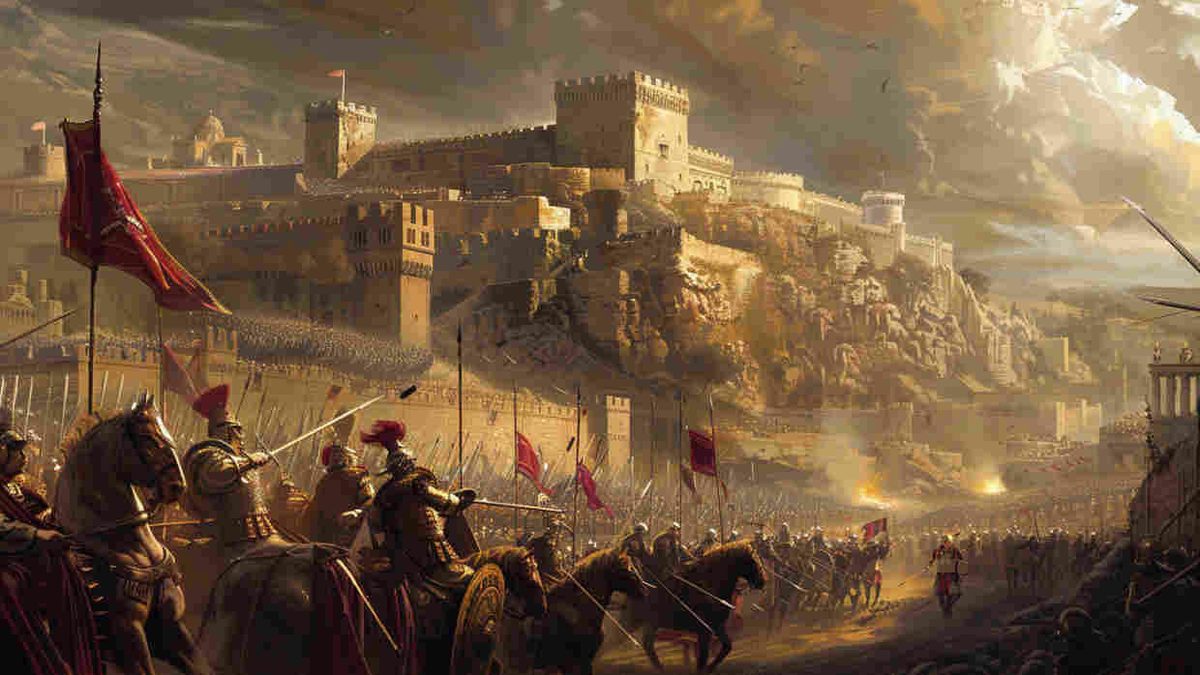
3. A circus in blood: how the empire celebrated victory
Trajan’s Rome recorded its victories on monuments and displayed them in the arena. To celebrate the Dacian wars, Trajan staged more than a hundred days of games; thousands of gladiators and animals were sent onto the sand as part of the triumph. This is the real background to the arena in our story — a place where death itself is part of the festival.
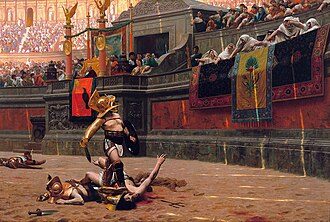
Prisoners of war, slaves, beasts and gladiators were put into the same theatre to kill one another, so that the Roman public could see the power of the empire.
4. Hadrian’s reign: admitting the world has edges
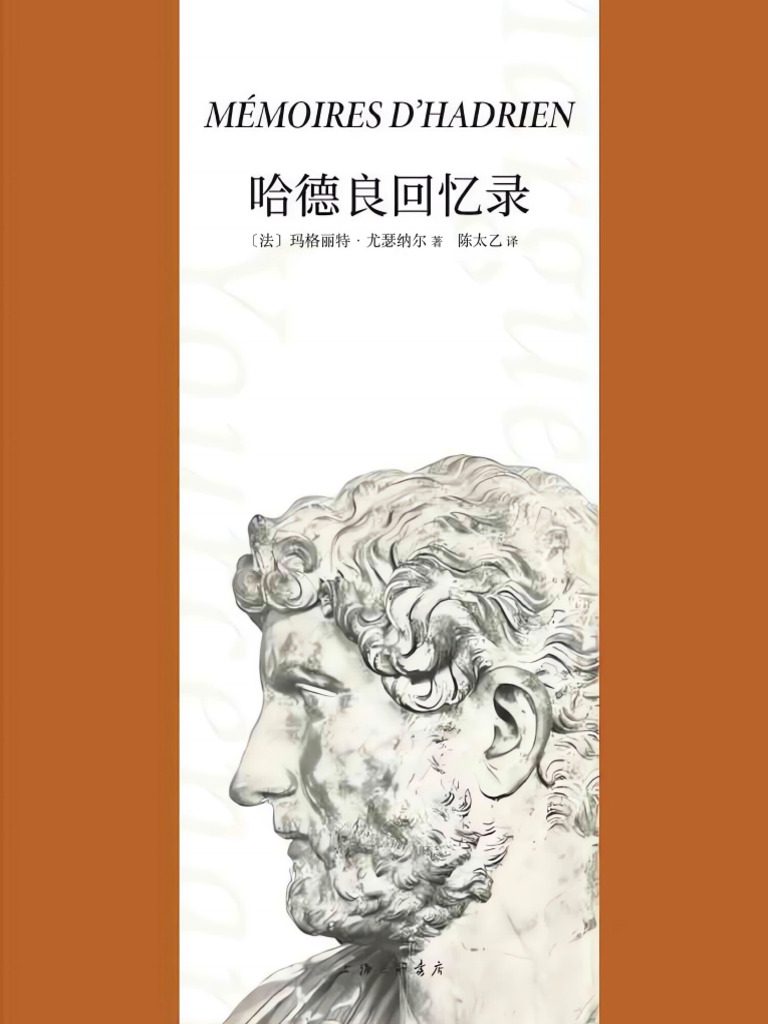
Trajan’s successor was Hadrian. Incidentally, the book that first drew us to Roman history was Marguerite Yourcenar’s Memoirs of Hadrian.
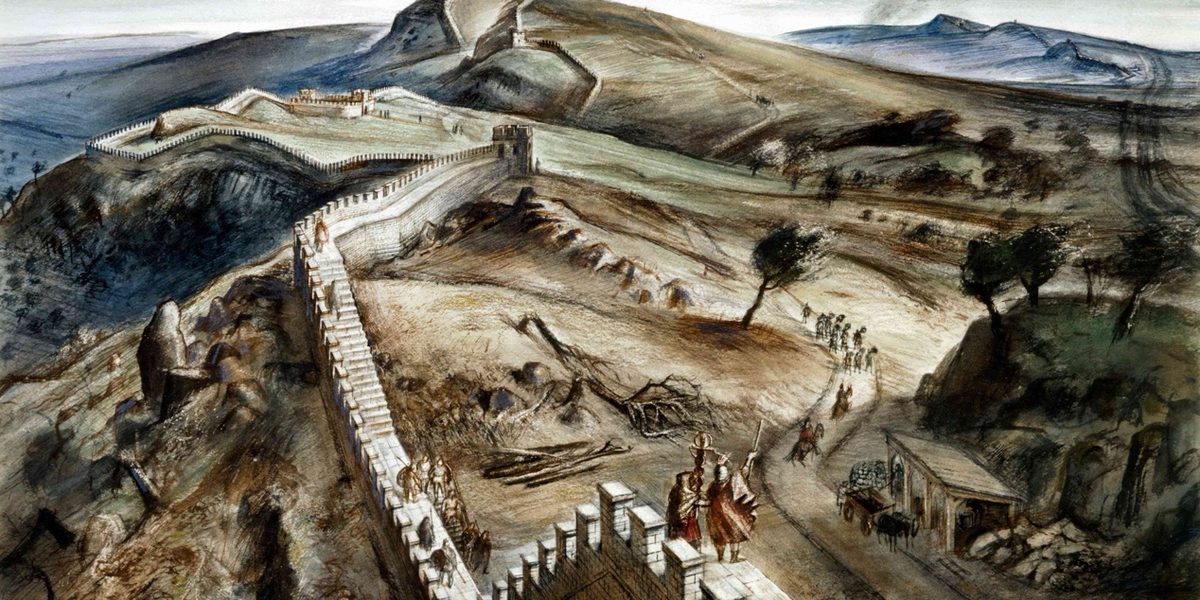
The first major act of this rather unusual emperor was to give up part of the eastern territory Trajan had just taken, pulling the Roman line back to positions that could actually be held. He stopped the expansion, turned to defence and administration, and built the wall that still carries his name. Putting up that wall marked the point at which Rome conceded, psychologically and practically, that the world had edges.
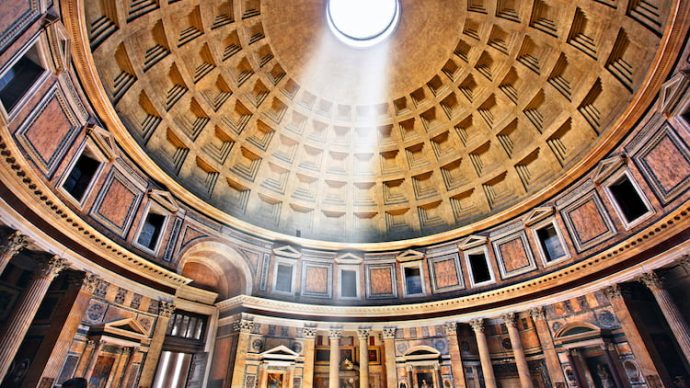
Hadrian went on to push hard for a unified body of Roman law, and funded cities, baths and theatres across the empire — the dome of the Pantheon was rebuilt in this period — trying to hold the peace with administrative order rather than the sword.
5. From Trajan to Hadrian
Aelia lives at the moment when Rome’s myth of itself is inflating hardest, and also at the very end of Trajan’s reign. What she sees is, on one side, the illusion of a prosperous age — conquest in every direction, triumphs, commemorative columns, the roar of the arena — and on the other, the reality of the Hadrianic age already arriving: withdrawal, fixed borders, order rebuilt.
Marcus, the legion commander who works against the protagonist throughout, is arguably that transition in one person. His values were formed in Trajan’s age of conquest. He wants the kind of career Trajan had, believes Roman conquest will never stop and will produce a Rome that is permanently strong, and is willing to lie to protect that belief — after all, strictly speaking, winning Trajan’s favour on campaign, being adopted, and succeeding him was not entirely out of the question.
Afterword
Looking back at the third act, what Aelia sees is not only a war. It is a real historical period, and a turn happening inside it. Throughout her life Rome had been expanding, writing Turkey, North Africa and much of Central Asia onto its map through scorched earth and conquest, until every road in the world led to Rome. History did not stay that way: after Trajan’s column of victories came the withdrawal behind Hadrian’s Wall, and that marked the end of Rome’s unstoppable ambition. What is strange to sit with is that Rome is now long gone, and even Latin — the language people were so proud of — has been a dead language for centuries.
We usually end this piece by quoting the closing passage of Yourcenar’s Memoirs of Hadrian, in which Hadrian expects disaster and ruin to come and chaos to win, but expects too that order will occasionally win, that peace will return between wars, that words like freedom and justice will recover their meaning, that not every book will be destroyed, and that from our pediments and domes other domes and pediments will follow. It is worth reading in the book itself.
Background to the fiction
This note is research for the original novel Death of a Gladiatrix, set in Trajan-era Rome. The Chinese original of this article is at 帝国地图的尽头.