Holding Up Half the Front: Soviet Women Miners in the Great Patriotic War
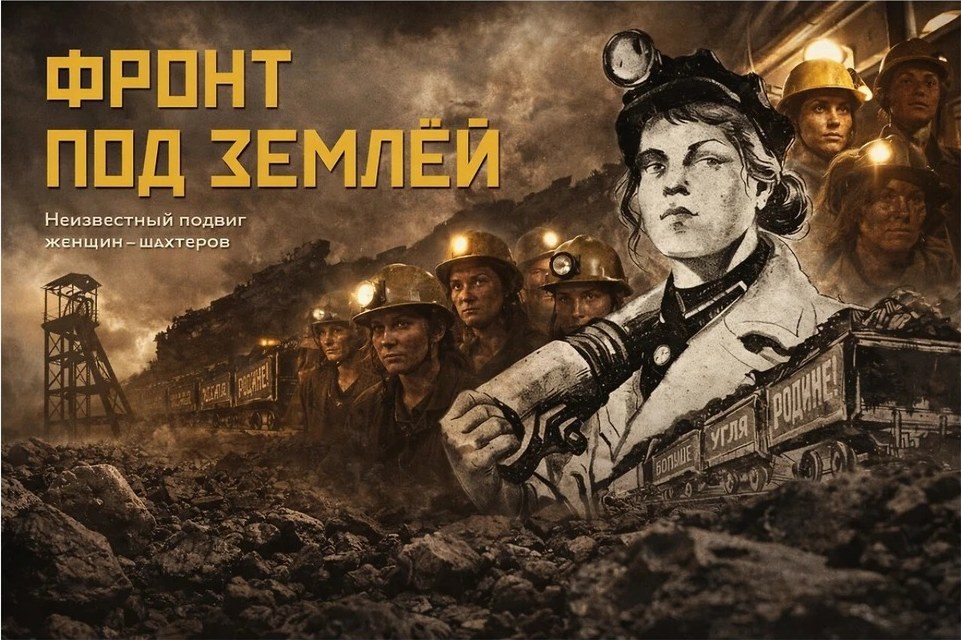
During the Second World War the Soviet Union ordered that 80 per cent of coal-mining posts be filled by women. Maria Grishutina, Alexandra Leonova, Yevdokia Korolyova — the real history of Soviet women miners in the Great Patriotic War.
On the eastern front of the Second World War — the Great Patriotic War, as it is called in Russia — German forces pushed deep into Soviet territory and at the closest point stood within reach of Moscow. That history has been retold endlessly. Looking through the margins of it, we found a group of women who have been almost entirely forgotten. They were sent down into the ground, and there they held up half the country. In 1943 the Soviet Union went so far as to order that 80 per cent of coal-mining posts be filled by women. They were the last spine the earth had in that war.
1. Why them
The answer is simple: because the war was merciless. With men falling at the front in batches and the belts of the industrial machine about to stop, the Soviet Union issued a flatly decisive instruction in 1943 — 80 per cent of the jobs in the coal mines were to be taken by women. This was no longer a campaign for the right to work. It was a nation spreading out a map and telling its women: the artery is nearly drained, and now it rests on your backs.
2. Who they were
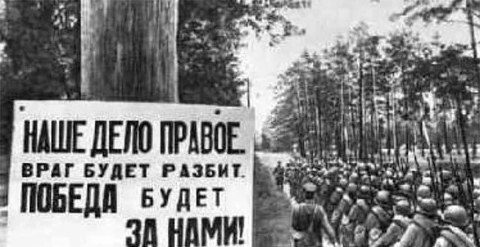
Equally simple: the most ordinary Soviet girls. Many were fifteen or sixteen the first time they went down. In lightless galleries they lifted 17-kilogram percussion drills and worked a dozen hours or more in contorted positions under seams only three metres high. Back at the surface there were hungry children, a failing vegetable plot and endless housework waiting. In that period what they held up really was an entire sky.
And the most remarkable thing about the Soviet women miners is not only the hardship. Several of them became genuinely legendary.
3. Maria Grishutina (Мария Гришутина, 1925–1993)
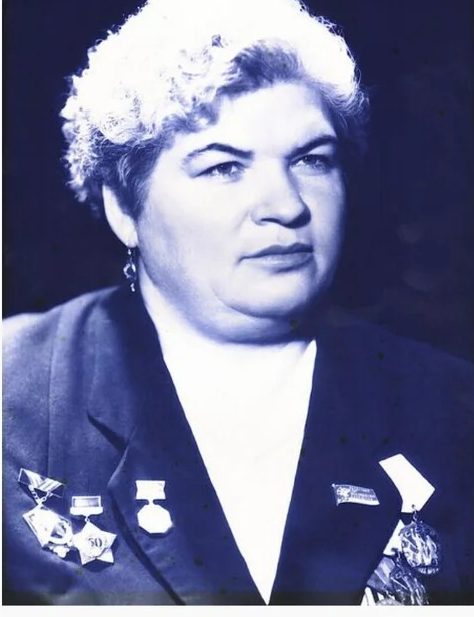
At eighteen she put together an all-women mining brigade. In 1943, under the call of girls, to the mines, she organised twenty brigades made up entirely of women, competing against one another to raise output. By mid-1944, more than a third of the miners in the local field were women.
Grishutina herself came close to matching the record of Alexei Stakhanov, the Hero of Socialist Labour: she cut 40.6 tonnes of coal in a single shift, roughly 11.5 times a miner’s quota, against Stakhanov’s own 12. After Victory Day her haulage brigade was awarded the Red Banner of the State Defence Committee and the All-Union Central Council of Trade Unions, to be kept permanently.
4. Alexandra Leonova (Александра Леонова)
She put down the scales and picked up a pneumatic drill. Before the war Alexandra was an ordinary shop assistant. When the country’s energy supply was about to break, she set down the scales and the sugar, went underground, and took a firm hold of a pick.
At first, outmatched physically, she could only do the most basic loading and unloading. But she learned the work quickly, and under extreme pressure produced astonishing endurance: her output climbed from barely meeting quota to 150 per cent, then 200, and finally settled at a suffocating 349 per cent. One woman was carrying close to the maximum output of three and a half adult male miners.
She made the national press, and soldiers at the front wrote in to salute her. She received the Medal for Distinguished Labour and honours as a model of socialist competition, and was among the first women in the Kuzbass region to be named an Honoured Miner.
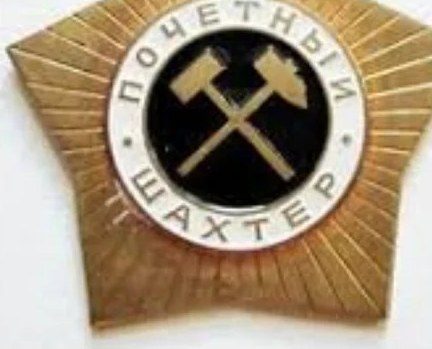
5. Yevdokia Fyodorovna Korolyova (Евдокия Фёдоровна Королёва, 1879–1981)
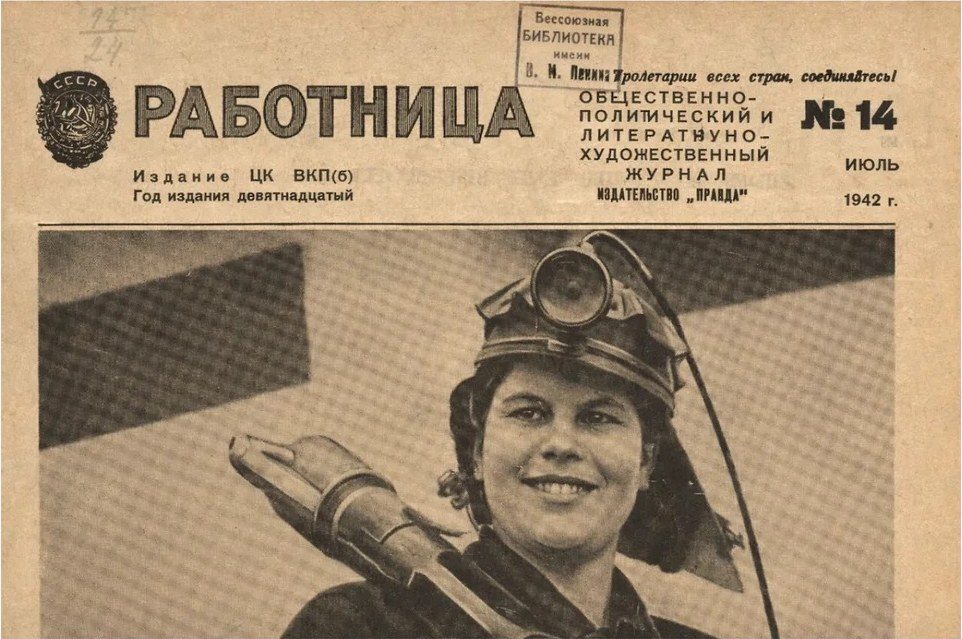
They called her the mother of the miners. The title sounds gentle; her life was saturated with hardship. She went underground at twelve, worked at hauling, pushing carts and operating equipment, and spent almost her whole life in the mines — for her, going down was how you stayed alive.
When the Great Patriotic War broke out she was sixty-three and had been evacuated far from home. There, past sixty, she took up a pick again and went back to driving heavy mine cars. This time not to survive, but to hold up a sky that was still too heavy for the young girls.
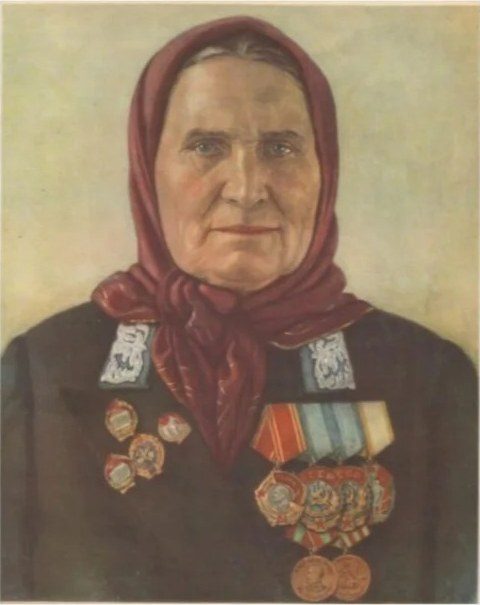
6. Going home after the war
Facing the wreckage, she led a group of surviving women workers in rebuilding on the ruins — running about to get nurseries, kindergartens and workers’ hostels established. People called her the mother of the miners, perhaps not for maternal softness but because, in years when the sky was falling and the girls around her had no idea what came next, she held everything up the way a mother would. Korolyova lived to 102, worked for seventy-five years, and only put down her tools at eighty-seven.
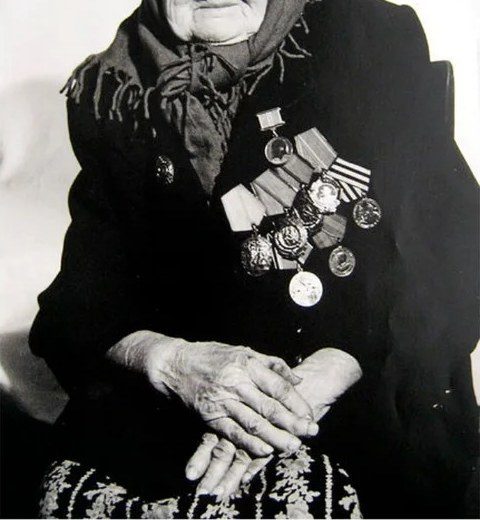
7. So who were these women
Sometimes I think that to our generation, at this distance from the war, they look like the background of a propaganda poster — hard muscles and a bright smile. But going back through the records of the time, what comes through is how vividly they actually lived:
They were girls of fifteen standing waist-deep in pit water. They were mothers cutting coal by day and nursing at night. They were real women pushed by war, industry and their era into the most dangerous position available.
What is staggering about them is not the slogan about women holding up half the sky. It is that once you brush the coal dust off the history, you find they were not history’s exception. They were the history.
Image credits
The illustrations are assembled from public material: wartime slogan photographs, the 1942 cover of Rabotnitsa, portraits of Maria Grishutina and Yevdokia Korolyova, and the Honoured Miner badge are Soviet-era historical images and archive photographs. The front underground poster is a later design commemorating the women miners. The original photographers and sources for a few images remain to be confirmed.
Background to the fiction
This note is research for the original novel Bread and Roses, set in the South Wales coalfield in 1910. The Chinese original of this article is at 在战火中顶起半边天:卫国战争中的苏联女矿工.