The Blank on the Imperial Map: The Real Seafaring World of the North Sea
Was the north really the empty wilderness Rome imagined? The North Sea peoples had a maritime world of their own: a single Viking-age wool sail took the fleece of around 2,000 sheep and thousands of hours of labour, and weaving it was very likely women's work.
No. The land Rome wrote off as wilderness had a working maritime economy — sail-weaving on an industrial scale, long-distance trade run in part by women, and a sea goddess with more than 160 known altars. Roman maps simply stopped recording once they passed a certain latitude.
In our story the North Sea is Scylla’s home and the source of what she believes. In the Vestal Claudia’s account, the people there bind their hair with bone pins and bronze rings, wear sealskin and coarse wool, and arrive off the water smelling of sea wind, fish and blood. They bring amber, baleen, hides and the long teeth of great beasts — and gods and stories Rome cannot make sense of. To Aelia, that place is very nearly a blank.
1. The north as Rome saw it
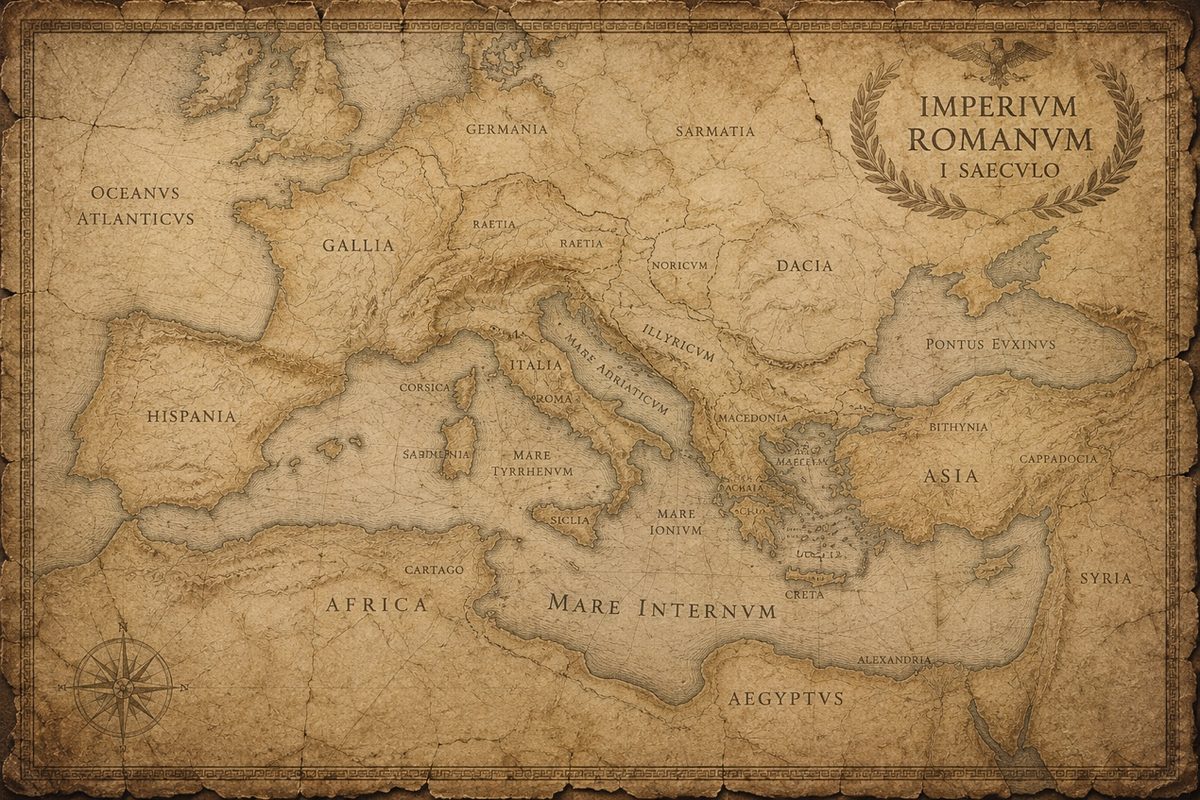
Roman-era maps put the Mediterranean at the centre of the world. The further north you go the thinner the record becomes, until at the edge of the world there is nothing left but a large expanse of wilderness. But was there really nothing where Scylla came from?
In fact, by the time Romans were wearing amber from the north and North Sea goods were moving down the trade routes into the heart of the empire, that supposed wilderness was already tightly bound to Rome. So we became curious: before she arrived in Rome, what might Scylla’s life have looked like?
2. What North Sea women may have done: weaving sails
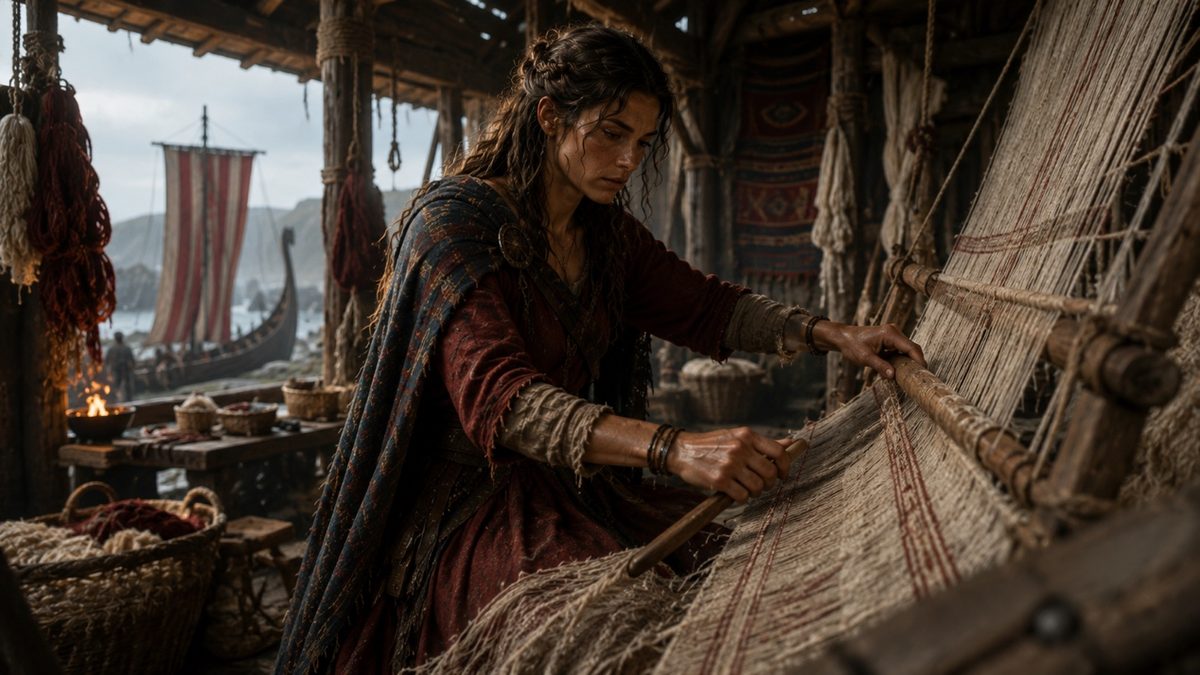
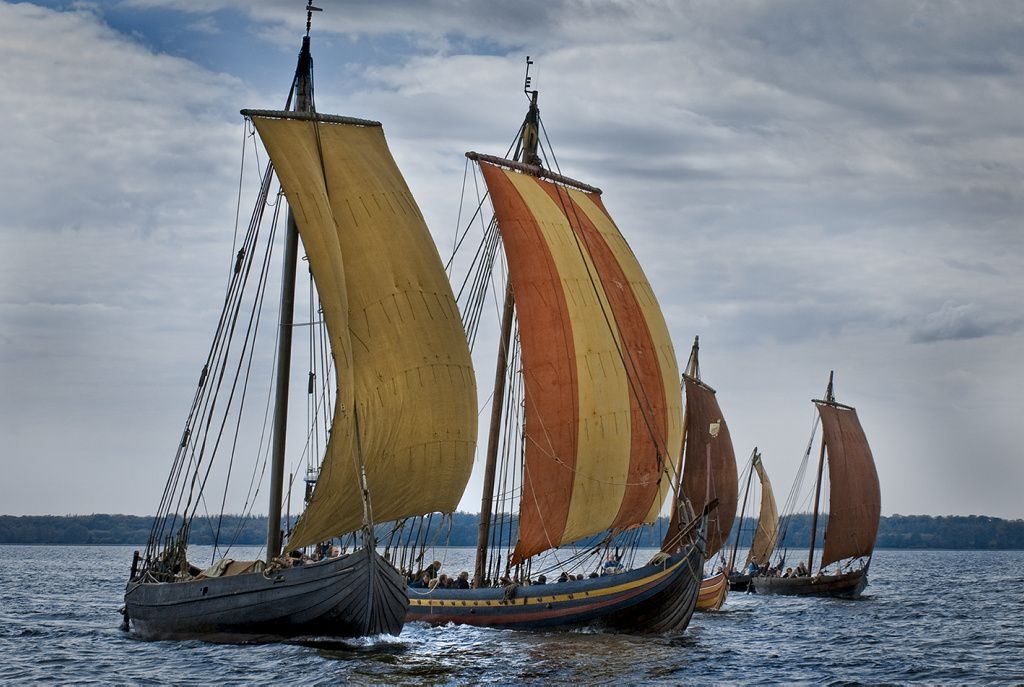
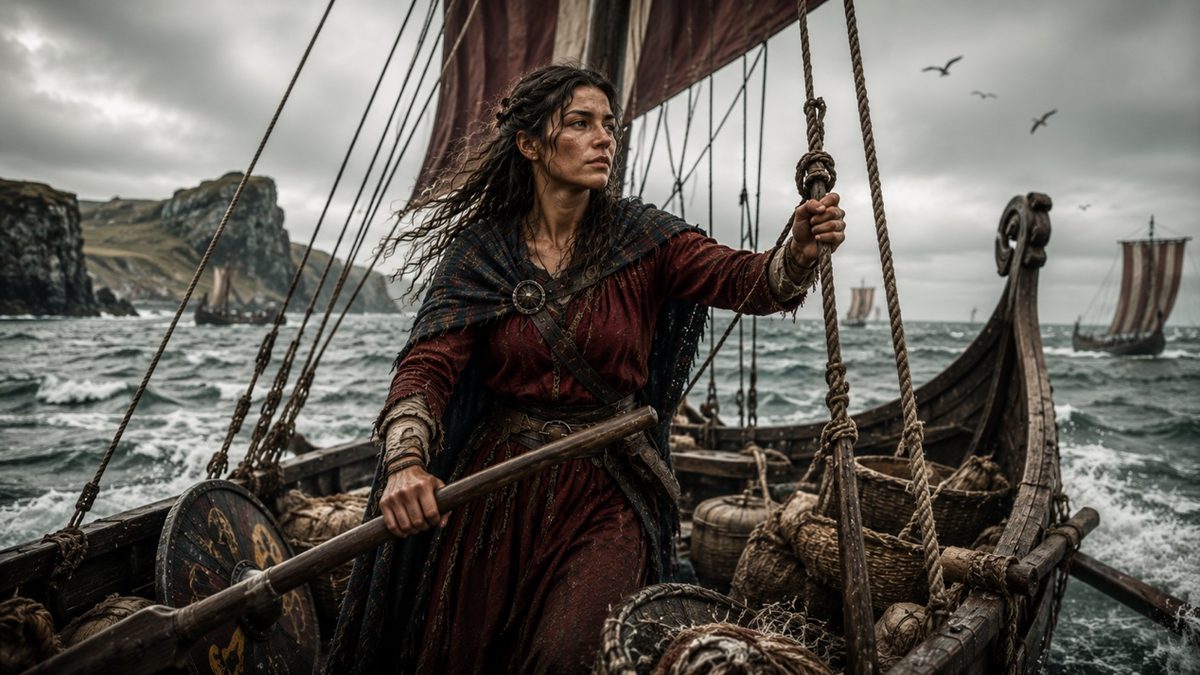
The northern peoples lived by the sea, and the one possession they could not do without was a ship — which meant a sail. What is surprising is that sail-making at the time was heavy industry in every sense: a wool sail for an ocean-going vessel could reach 100 square metres, requiring around 200 kilograms of wool — the fleece of roughly 2,000 sheep — and hundreds or even thousands of hours of labour.
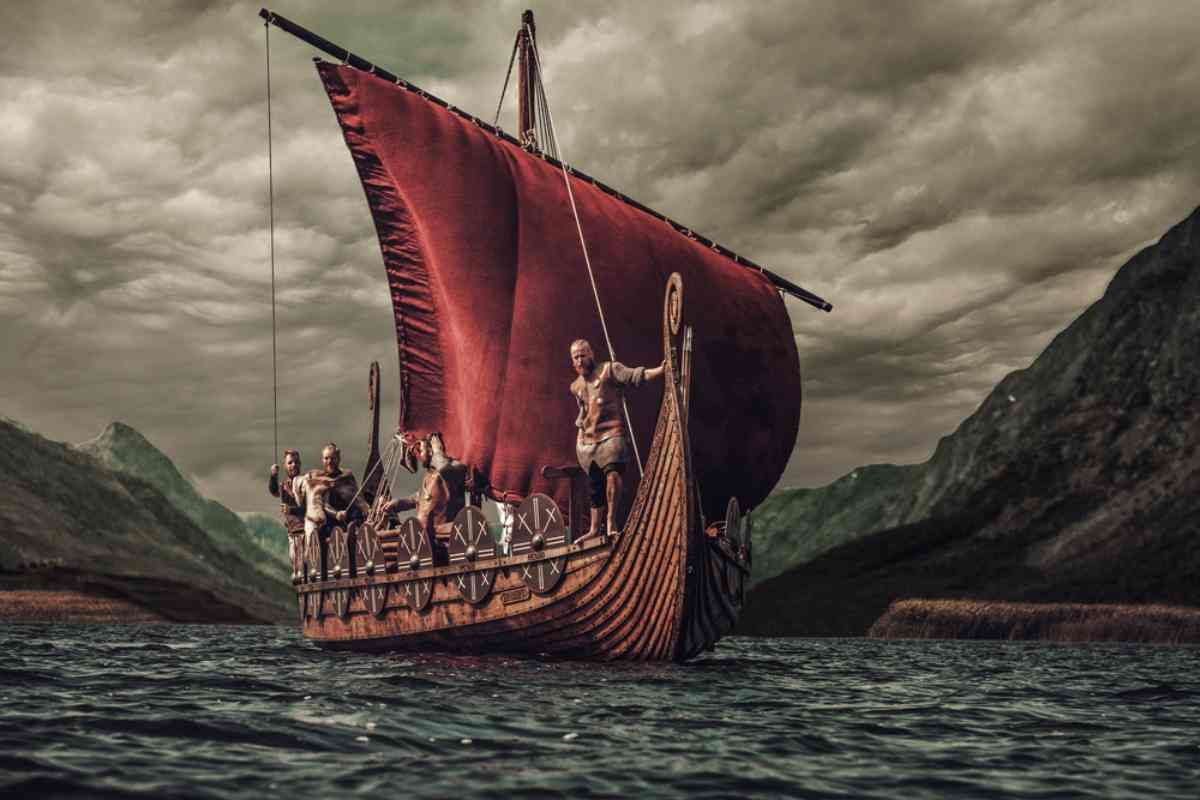
Modern estimates put the cost of a single Viking-age wool sail, materials and labour together, at the equivalent of about 1.8 to 2.4 million US dollars. A ship often needed two. Many women along the North Sea were very likely engaged in weaving them by hand. (These figures come from archaeology of the Viking age, after AD 800.)
3. What North Sea women may have done: trade
At Birka in Sweden — one of the most important trading centres of the Viking age — about one third of the grave goods connected with trade and finance come from women’s burials. Of the weighing equipment and weights associated with the eastern trade routes, around a fifth were found in women’s graves. More striking still: research by Stalsberg (2001) and Stig Sørensen (2009) records women buried with complete sets of scales, weights, and goods brought from far away.
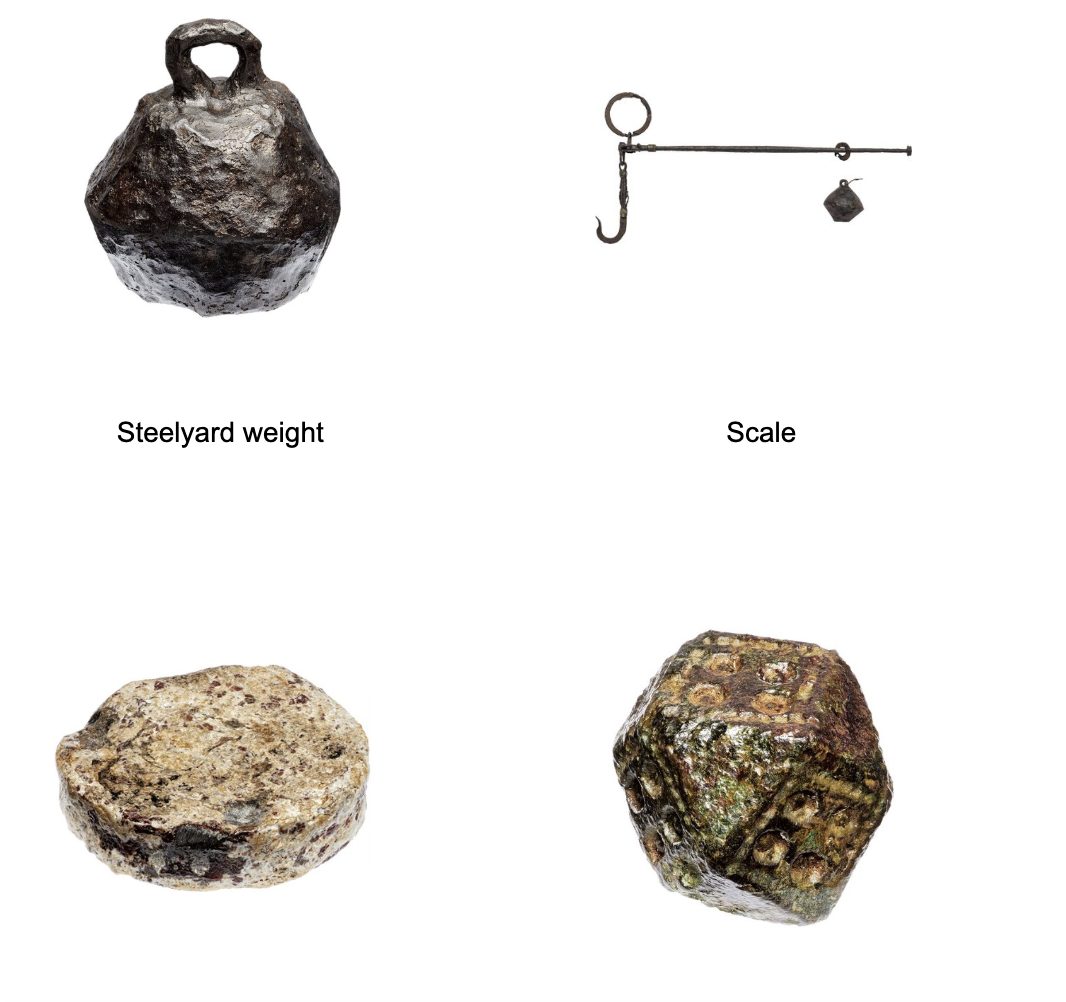
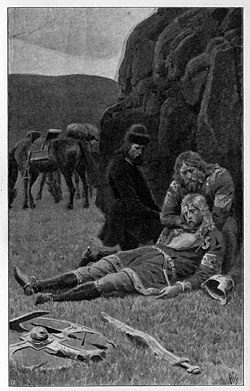
In Iceland, the medieval Laxdæla saga tells the story of a woman named Aud, who built and fitted out a ship of her own and set off on a trading expedition.
4. Nehalennia: a goddess dredged up from the sea floor
Who was Nehalennia? She was a sea goddess widely worshipped along the North Sea coast. In the present-day Netherlands, archaeologists have found more than 160 altars dedicated to her.
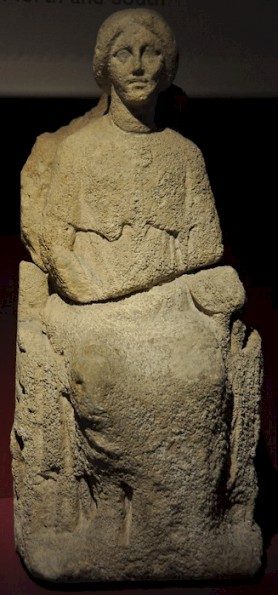
The altar inscriptions show that merchants would discharge a vow to her after completing a crossing of the North Sea, thanking her for cargo that reached port safely.
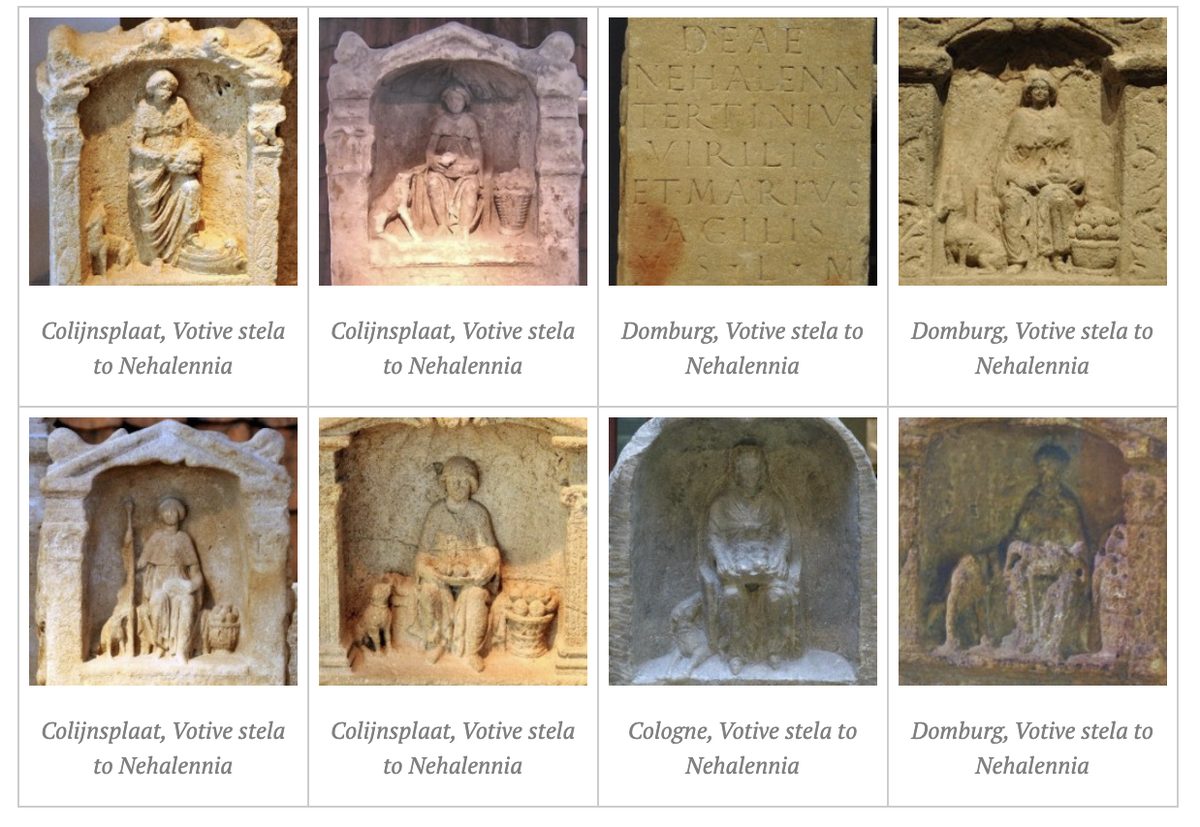
Scholars suggest the name Nehalennia may be connected to a Celtic word for the sea, with a sense close to she who guards the sea. For the people living along that coast she was not only a god of the water but the hope of getting home.
Afterword
We never fixed where exactly Scylla lived before the arena, or how she came to be a gladiator. But tracing the real lives of North Sea people does turn up scattered marks: a piece of amber carried a long way, a shrine that sank to the sea floor, a trader’s weight, a sail filled with wind.
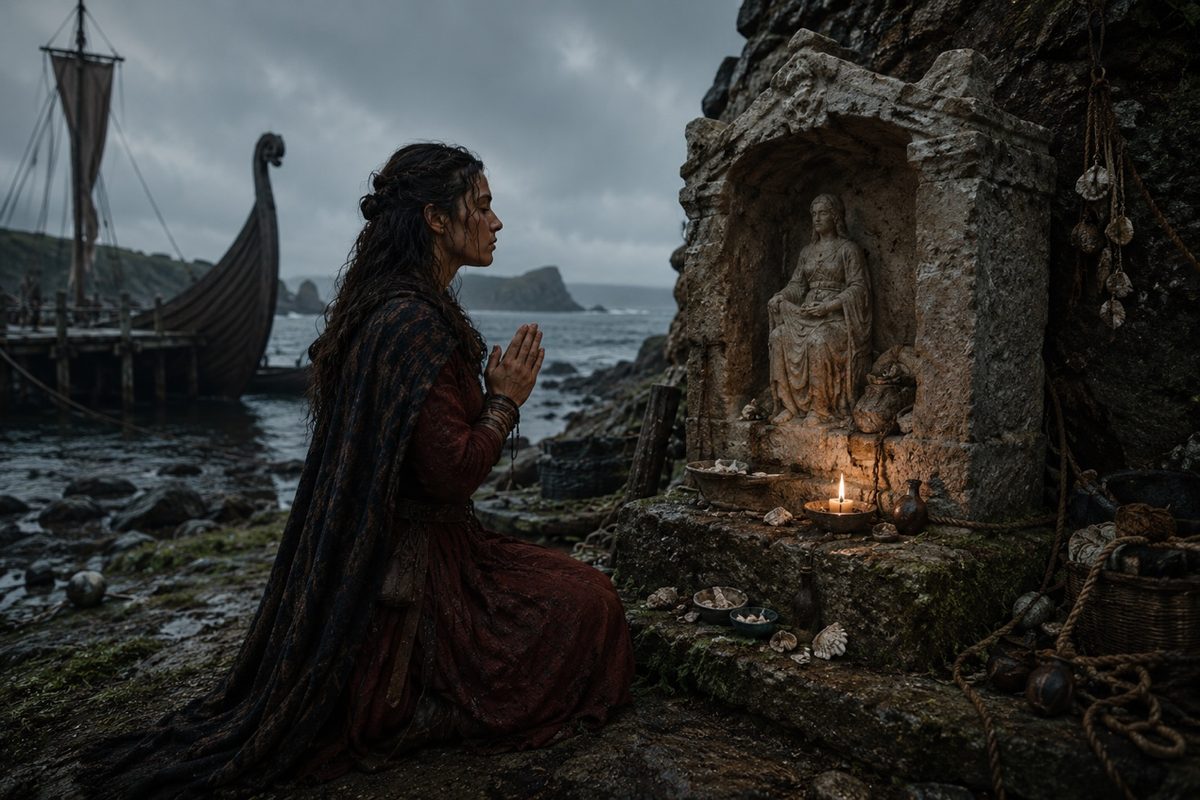
So we imagine along those fragments. Perhaps before she was a fighter she stood at the water’s edge weaving sail. Perhaps she crossed a storm aboard a trading ship. Perhaps, coming home, she left a small offering for Nehalennia.
Background to the fiction
This note is research for the original novel Death of a Gladiatrix, set in Trajan-era Rome. The Chinese original of this article is at 帝国版图上的留白:北海人真实的航海世界.