The Folded History of Women in the Dunhuang Archive
Beyond the sutras and the caves, the Dunhuang manuscripts record women's marriages, divorce deeds and daily livelihoods. A history of women as the Dunhuang archive kept it.
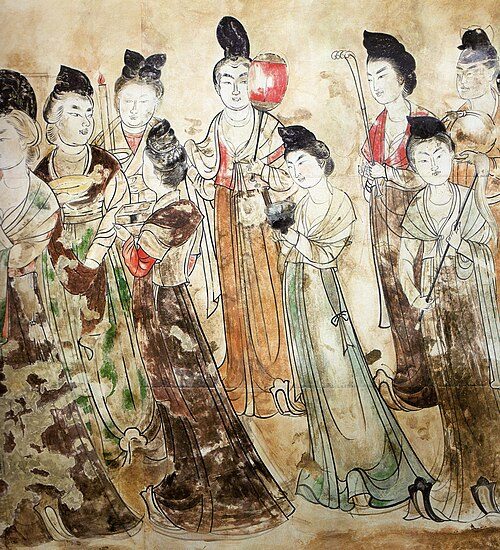
Say Dunhuang and most people think first of sutras, the flying ribbons of the apsaras, the faint light in the caves, and the old roads crossing the desert. But between the yellowed sheets, the broken contracts and the weathered wall paintings there is another history — less conspicuous and no smaller. A folded history that belongs to women.
They are not prominent, but they lived in Dunhuang’s history in a fully concrete way: running their livelihoods, handling marriages, negotiating back and forth, leaving their own judgements and traces across households and local society. Most of the names are long lost and most of the voices survive only in fragments. Yet it is exactly this scattered material that lets them take shape again out of the sand, and lets us see, across a thousand years of dust, the women who lived, acted and chose in that oasis city.
1. Contracts and mutual aid: the women’s societies
The Dunhuang documents preserve a kind of mutual-aid association organised by ordinary women on their own initiative, called a nüren she — a women’s society. These were not loose neighbourhood gatherings. They had written rules, binding obligations and an explicit division of responsibility.
Women joining a society drew up articles together and pressed their fingerprints onto the document. When a member faced a major event — a marriage, a funeral, a birth, an illness, a death — the others were required by the agreement to contribute money and labour, donating grain or cloth and helping to handle the arrangements. Anyone who was absent without cause, refused to pay a share, or stirred up trouble inside the society faced penalties: fines in wine or oil, and in serious cases expulsion.
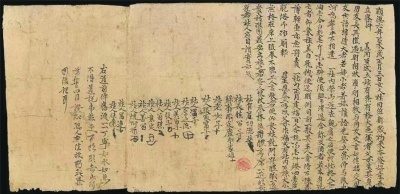
These documents, with all the texture of ordinary life on them, show how the women of Dunhuang held on to each other in practice. In that distant period they were able not only to set rules but to keep order by them, building a stable and legible network of mutual support out of small, concrete daily pressures.
2. Under the statutes: the property and land they held
Set against the conventional picture of men farming and women weaving, the Dunhuang documents of the Tang and Five Dynasties periods show women as creators of wealth and also as lawful owners and managers of property.
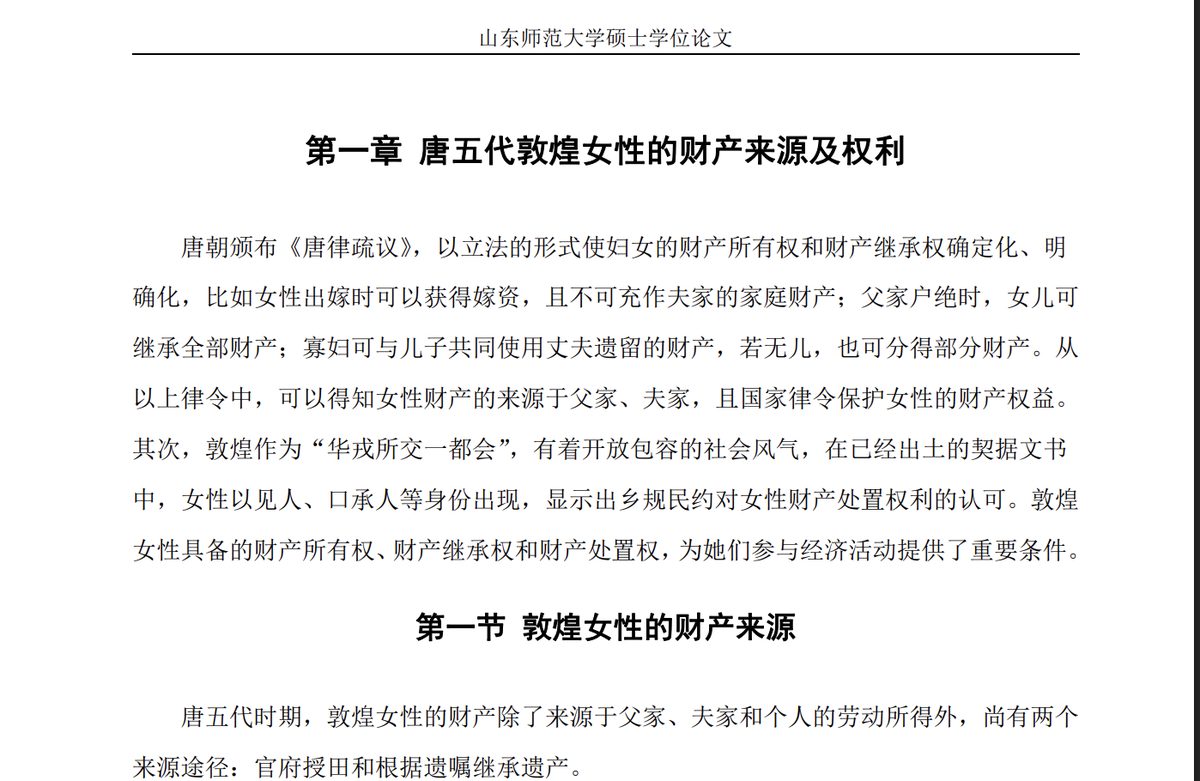
Acquisition and inheritance under the statutes. Under Tang equal-field regulations, women registered as widows, and women heading households with no adult men, held clear entitlements to land allocation. In practice the Dunhuang authorities allocated land to female-headed households according to their available labour, without treating them unequally — and used legal instruments to protect widows’ land from being seized. Inheritance by will was uncommon, but the Dunhuang documents do preserve cases: the nun Linghui left a maidservant to her niece Pan Niang, and the monk Chong’en left a young girl to his adoptive daughter in his will.
Recognised control of property, and standing as a party to contracts. Dunhuang women held real control over household property, and society at the time broadly recognised it. In a large number of private loan contracts, women appear and sign in their own independent capacity — as co-borrowers, or as guarantors — which means they could negotiate on the household’s behalf and take on the corresponding legal and financial liability against household assets.
3. The women donors on the cave walls
The Mogao wall paintings are not only a space for religious imagination; they also preserve layer upon layer of Dunhuang’s actual society. The figures of women donors, especially from the late Tang through the Guiyijun period into the Northern Song, are traces the women of that time left themselves. A donor here means a believer who paid for the construction of a cave or its images as an offering.
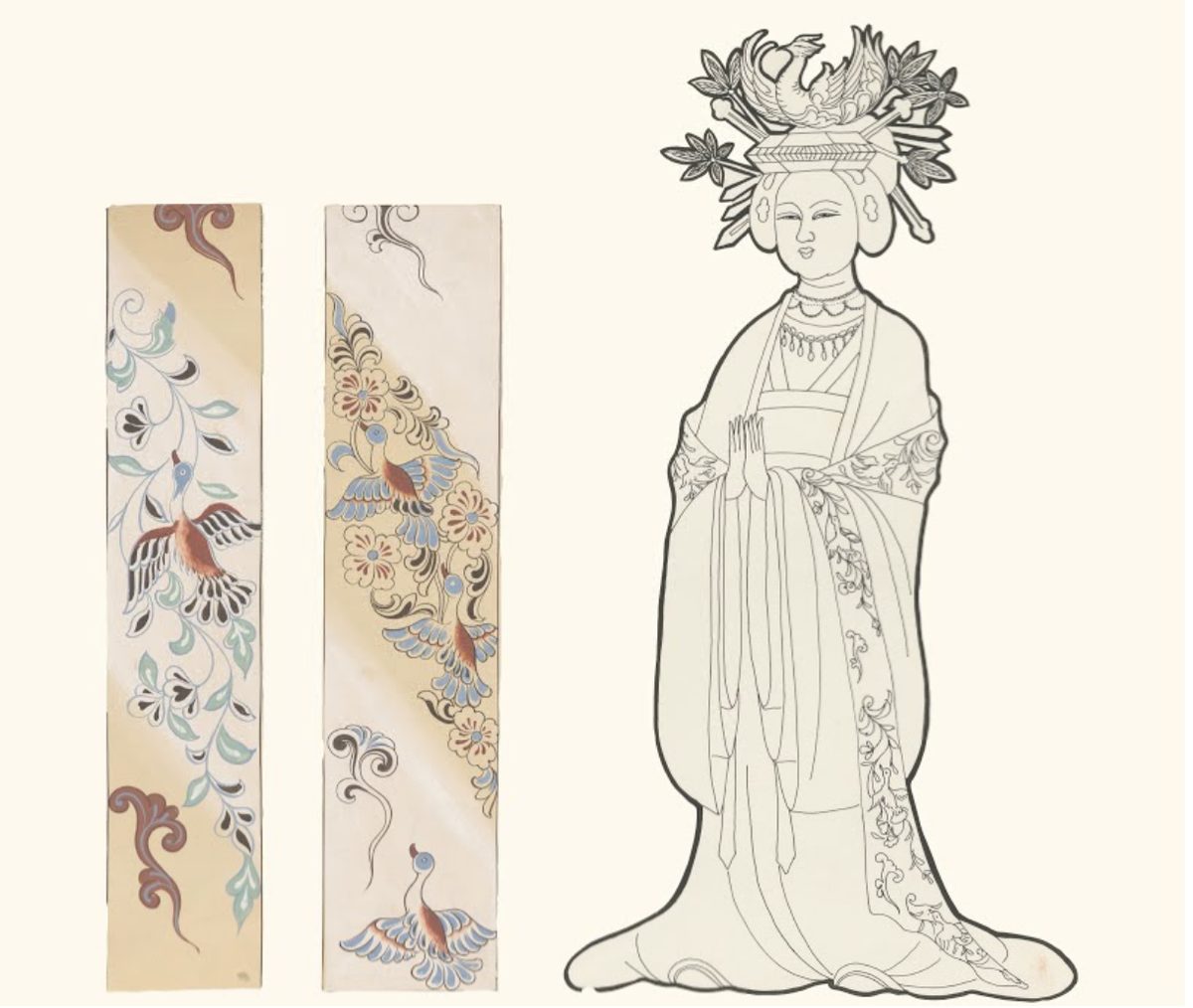
These donor portraits tend to be richly dressed and prominently placed. The women wear ceremonial robes and elaborate headdresses, their faces composed and their bearing formal, and they occupy a clear position in the cave that cannot be overlooked.
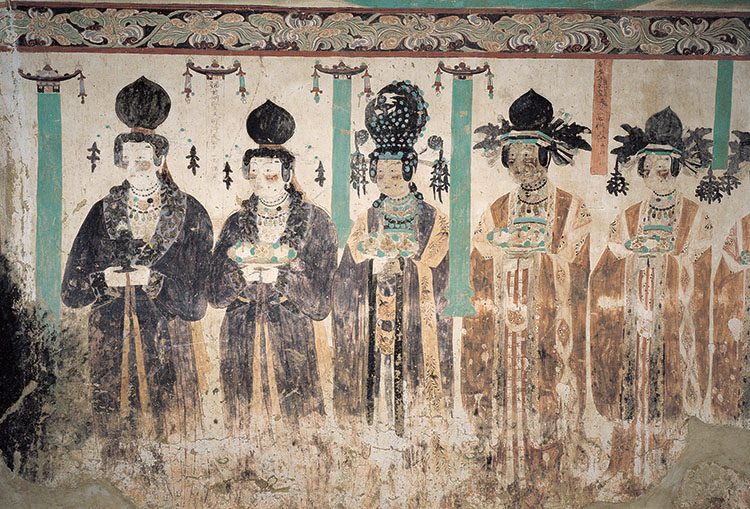
These are not vague accompanying figures. They are the people who paid, painted deliberately into the cave.
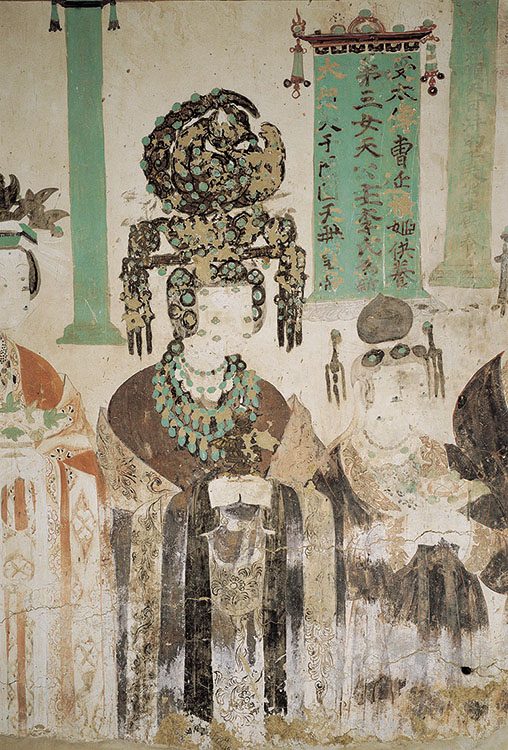
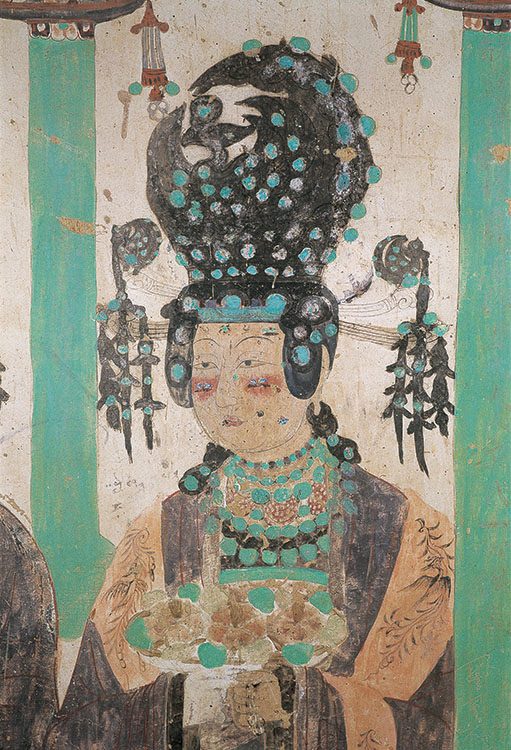
In a city like Dunhuang, where several spheres of power met, these images are not decoration. Their presence means that family, standing, wealth and networks were being recorded on the rock. What the paintings show is not a still beauty but women who genuinely took part in Dunhuang’s social order and left a mark on it in their own way.
Afterword
These few slices of history, preserved by sand, assemble into a picture of women’s lives in Dunhuang: some forming societies for mutual aid under the pressure of daily hardship, some inheriting property under the protection of law, some placing their own figures into the cave paintings and so into a wider local society and memory.
Looking back along the pages, the fingerprints and the portraits, we can see it again: in this oasis city on the Silk Road, women were never only silent figures. They were inside life itself, leaving marks of their own.
Background to the fiction
This note is research for the original novel Where She Goes, set in AD 632. The Chinese original of this article is at 敦煌档案里的女性折叠史.